
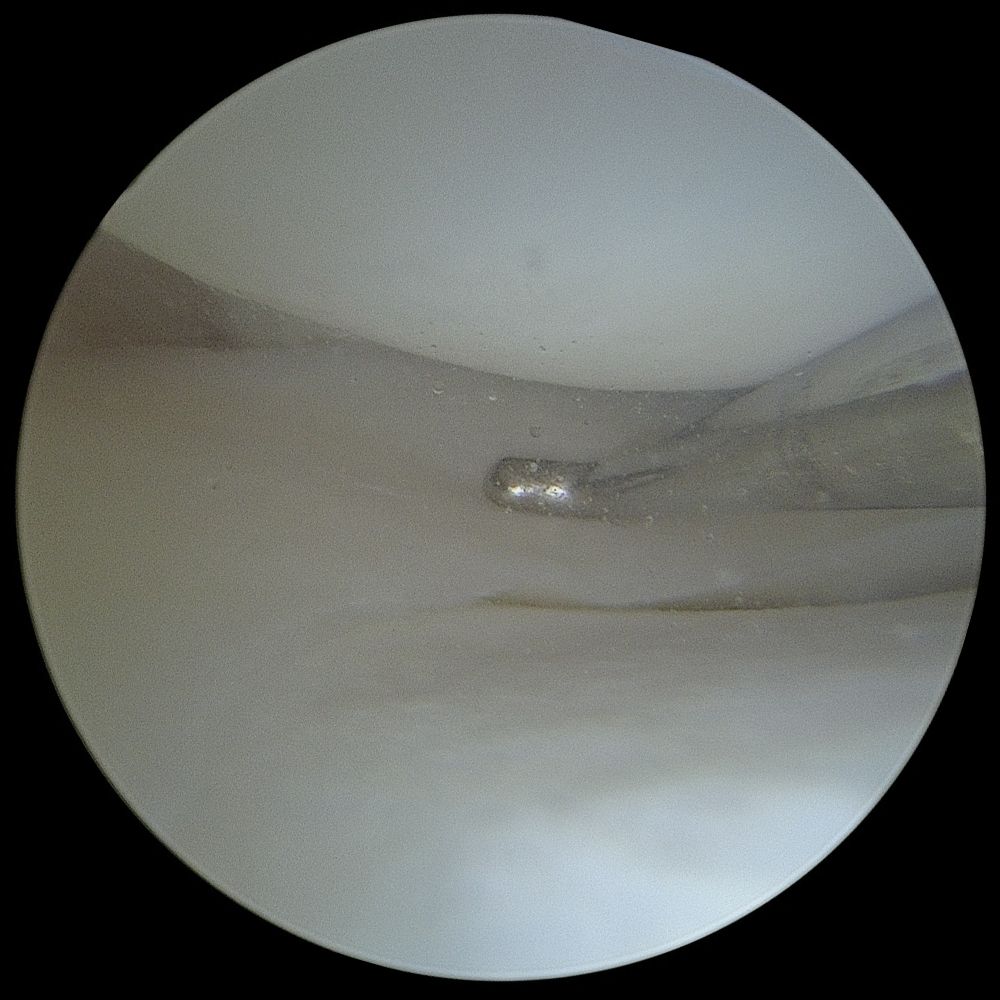
What is a knee arthroscopy?
Knee arthroscopy is keyhole surgery on the knee. The surgeon makes one or more small incisions, each about a 5-7 mm long, and puts a thin camera (called an arthroscope) into the knee. The camera shows the inside of the joint on a screen. Small instruments go in through the other incisions to treat what is found. Dr Alexey Borshch performs knee arthroscopy in Brisbane, consulting in Hamilton and operating at Brisbane Private Hospital, most often for meniscus tears, loose bodies and cartilage injuries.
Surgeons first used this way of looking inside the knee in the early 1900s (PMID 12966386), and it has since become one of the most common operations in orthopaedics (PMID 10495192). Today it is mainly used to assess and treat conditions of the meniscus (the rubbery cushion between the thigh bone and shin bone), to rebuild a torn ACL or PCL ligament, and to treat some cartilage injuries.
What are the benefits of a knee arthroscopy?
Knee arthroscopy is considered minimally-invasive surgery. The main benefit is that the surgeon can see and treat the problem through small cuts, without opening up the knee. Arthroscopy also allows for visualisation of areas of the knee that could actually be harder to see with bigger incisions, or may require multiple incisions.
Knee arthroscopy can be therapeutic or diagnostic. However, with modern imaging techniques, arthroscopy is often used as a final step in confirming the diagnosis before proceeding with treatment.
What are the risks of a knee arthroscopy?
Knee arthroscopy does not help every knee problem. For wear-and-tear (arthritis) pain in middle-aged and older people, large studies have found little or no lasting benefit compared with exercise and other non-surgical care (PMID 26080045; PMID 28490431). This is why a careful assessment matters before deciding on surgery.
Knee arthroscopy is generally a safe operation, but no surgery is free of risk. In a study of more than 180,000 people, the most common problem in the first month was a blood clot in the leg (deep vein thrombosis), in about 3 in every 1,000 people. A clot that travelled to the lungs happened in fewer than 1 in 1,000 (PMID 23395251). You should discuss your individual risk of developing a blood clot with your surgeon and decide on the need for blood-thinning medication (PMID 39018574).
Other possible problems include swelling or bleeding inside the knee, stiffness, ongoing pain, numbness near the small cuts, and infection. Infection inside the joint is rare but serious, and may need further surgery and antibiotics (PMID 29114639). Problems are more common after bigger keyhole operations, such as ligament reconstruction, than after simpler procedures (PMID 24284049). There are also risks from the anaesthetic, which your anaesthetist will discuss with you.
Summary
Knee arthroscopy lets a surgeon look inside the knee and treat some problems through small cuts. It works well for certain injuries, such as some meniscus tears and ligament injuries, but it is not a cure for knee arthritis. It is usually recommended only when the expected benefits for you outweigh the risks. Your surgeon will talk through your diagnosis, the other options and what recovery involves, so that you can decide together.
General information only. The information on this page is general in nature and does not replace individual medical advice. All surgery carries risks, and results vary between patients. Please discuss your own circumstances with your treating practitioner.