
What is radiofrequency ablation of the genicular nerves?
Pain from the knee joint is carried to the brain by small sensory nerves that run around the outside of the knee, called the genicular nerves. Radiofrequency ablation (RFA) is a minimally invasive procedure that uses heat to stop some of these nerves from carrying pain signals. A fine needle-like probe is passed through the skin and placed next to each nerve, using X-ray (fluoroscopy) or ultrasound guidance. Radio-frequency energy then heats the tip of the probe, usually to about 70–80°C for 60–90 seconds, which creates a small area of treated nerve (PMID 31333900; PMID 30271194). No incisions are needed, and the treatment is done outside the knee joint rather than inside it (PMID 31333900).
Most often three nerves are treated: two on the inner (medial) side of the knee, above and below the joint line, and one on the outer (lateral) side above it. The exact position of these nerves varies between people, and some techniques treat additional nerves (PMID 34308957; PMID 30271194). Variations of the technique include conventional, cooled and pulsed radiofrequency (PMID 31333900).
Genicular nerve RFA is a treatment for pain. It is mainly used for ongoing knee pain from osteoarthritis (wear-and-tear arthritis) when non-surgical treatments have not helped enough, and for people who are not able to have, or do not wish to have, a knee replacement or partial knee replacement. It is also sometimes used for ongoing pain after a knee replacement (PMID 31333900; PMID 40855681).
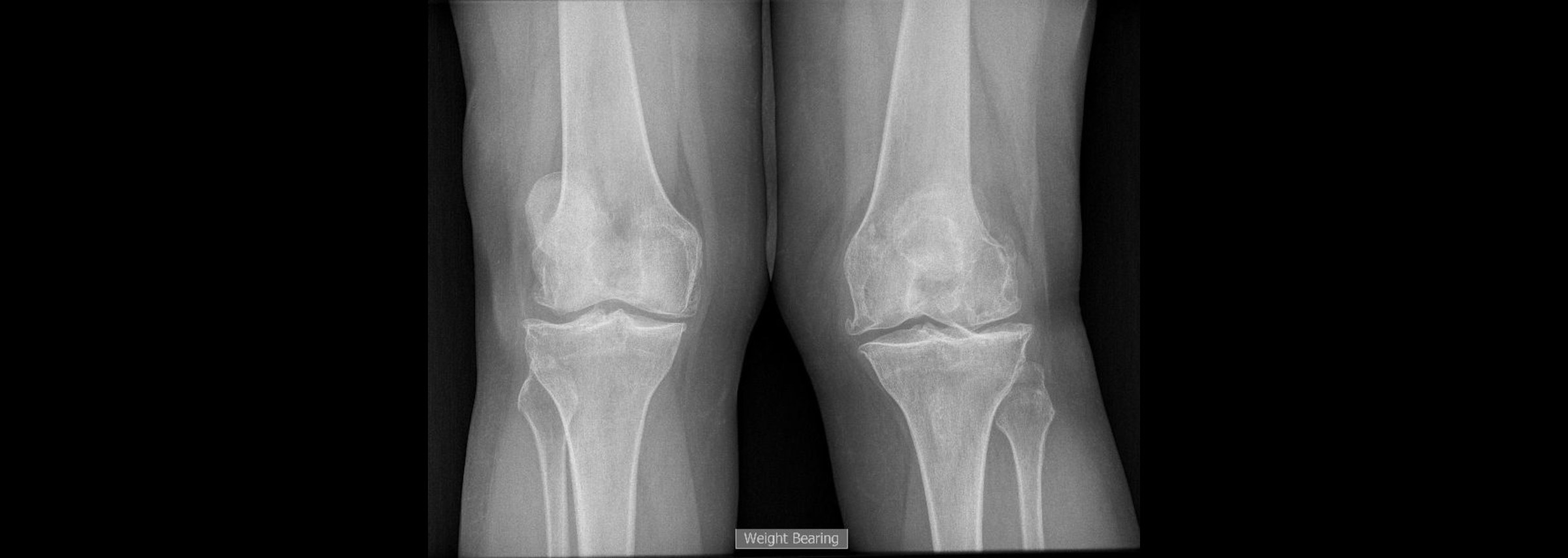
A thorough clinical examination by a specialist and modern imaging, such as standing X-rays of the knees, help confirm that the pain is coming from the knee joint and assess the arthritis. Before the ablation, a diagnostic (test) injection of local anaesthetic is often placed around the same nerves; if this reduces the pain substantially for some hours, ablation is more likely to be considered (PMID 31333900; PMID 30271194).
What are the benefits of radiofrequency ablation of the genicular nerves?
It reduces knee pain and improves function for many people with knee arthritis. In a double-blind trial in which some patients had a sham (pretend) procedure, people who had genicular RFA had less pain and better knee scores at 4 and 12 weeks, and about 6 in 10 had at least half of their pain relieved (PMID 21055873). A 2026 review of eight sham-controlled trials (627 patients) found that ablation reduced pain at 12 weeks and improved function (PMID 41063397).
It has compared well with some other non-surgical treatments. In a multicentre trial of 175 people, 71% of those who had cooled RFA had at least half of their pain relieved at six months, compared with 38% of those who had a hyaluronic acid (gel) injection, and function improved more after RFA (PMID 32898379). Other trials have found RFA more effective than steroid injections and pain medicines taken by mouth (PMID 34308957).
For people who respond, relief often lasts between 3 and 12 months (PMID 30271194), and sometimes longer: in one follow-up group, 63% still had at least half of their pain relieved two years after cooled RFA (PMID 35716058). The procedure can be repeated in people who responded well the first time (PMID 31333900).
It does not rule out surgery later. In a large database study, people who had genicular RFA before a later knee replacement did not have more complications after the replacement than those who had a knee replacement alone (PMID 35960987). For some people with ongoing pain after a knee replacement, genicular RFA has also improved pain (PMID 40855681; PMID 41988824).
What are the risks of radiofrequency ablation of the genicular nerves?
It does not help everyone. In a review of 28 studies (2,218 people), about half of patients had their pain at least halved at six months, which means the other half did not (PMID 40855681). Some sham-controlled trials have found no clear difference: in one trial of 64 people, pain at 12 months was similar after RFA and after a sham procedure (PMID 36543391). A 2025 review of 25 trials (2,049 people) found that the evidence is of low certainty, with pain relief over sham at 4 and 12 weeks but not at 24 or 48 weeks, and no clear improvement in function (PMID 40054598).
The effect is temporary. The treated nerves can regrow, so the pain can return, and further treatment may be needed (PMID 31333900). RFA treats the pain, not the arthritis itself: it does not repair cartilage or change the shape or alignment of the knee, and an animal study has raised the possibility that removing nerve supply to a joint may speed up arthritis (PMID 31333900). Having RFA a few weeks before a planned knee replacement did not reduce pain or improve recovery after the replacement in a sham-controlled trial (PMID 31023931). The evidence for RFA for pain after a knee replacement is limited and of low quality (PMID 40855681; PMID 41988824).
Serious complications are uncommon, but no procedure is free of risk. Reported problems include infection inside the knee joint, injury to a tendon on the inner side of the knee (pes anserinus), skin burns, and bleeding under the skin or into the knee joint (PMID 33517427). The genicular nerves run close to small arteries that supply the knee and kneecap; injury to these arteries can cause bleeding or an abnormal swelling of the artery (pseudoaneurysm), and in surgical literature has been linked to loss of blood supply to the kneecap (PMID 27389113). Other possible problems include temporary pain, bruising or numbness where the probe was placed.
Summary
Radiofrequency ablation of the genicular nerves uses heat, delivered through a fine probe under imaging guidance, to stop some of the small nerves around the knee from carrying pain signals. It may be recommended for ongoing knee arthritis pain when other treatments have not helped enough and the expected benefits for you outweigh the risks. You should discuss your symptoms, your X-rays and your goals, including whether you are considering a knee replacement, with your knee surgeon so that you can consider the options and the indications for treatment together.
General information only. The information on this page is general in nature and does not replace individual medical advice. All surgery carries risks, and results vary between patients. Please discuss your own circumstances with your treating practitioner.