
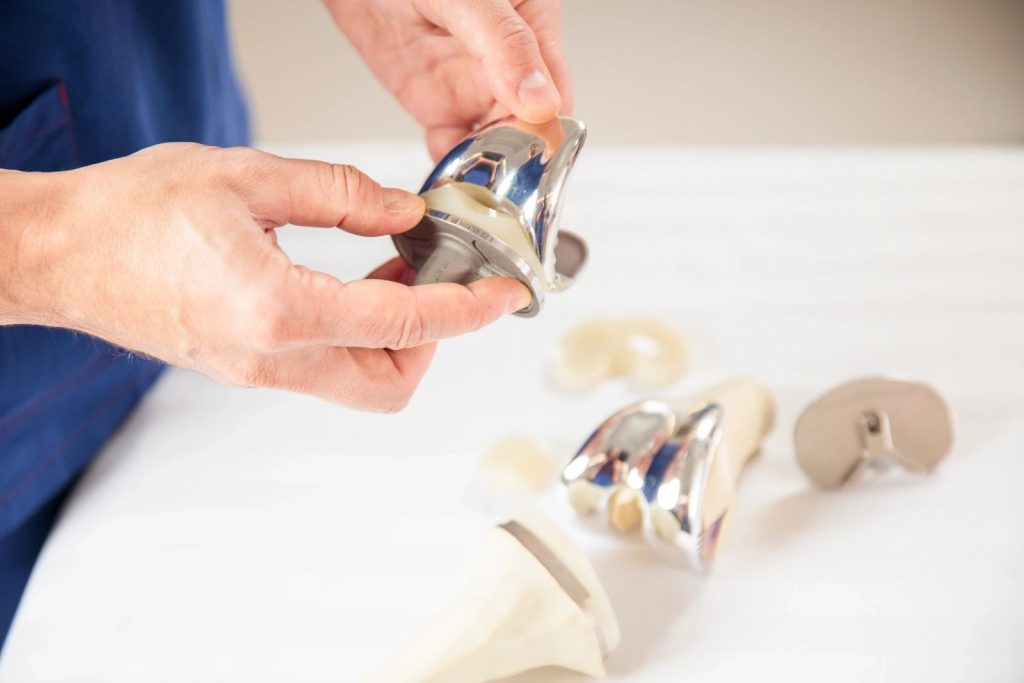
Robotic Knee Replacement - Brisbane & Hamilton
Robotic knee replacement is a technology used to assist an Orthopaedic surgeon to perform a knee replacement with additional precision and information. Dr Alexey Borshch provides robotic knee replacement assessment and surgery in Brisbane, with consultations in Hamilton.
Your individual condition and treatment plan may be different, so this information should be used alongside advice from your surgeon and treating team.
What is Robotic Knee Replacement Surgery?
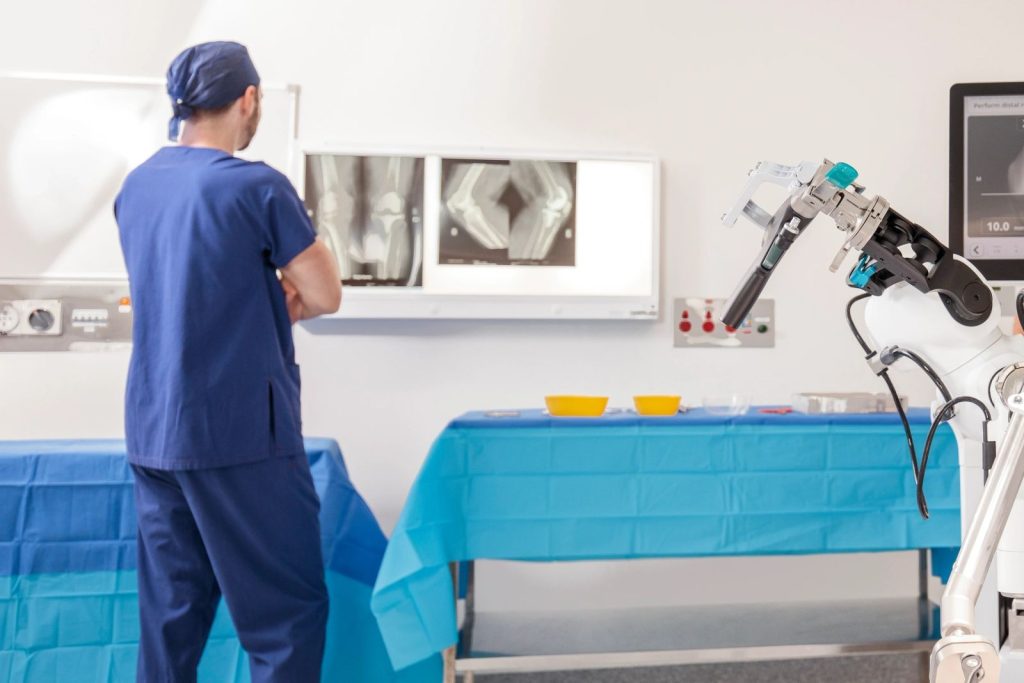
Robotic technology assists the surgeon with planning and performing knee replacement surgery.
During a conventional knee replacement, the surgeon uses specialised instruments to determine where the bone cuts should be made and where the implants should be positioned.
Computer navigation and robotic systems provide additional measurements during this process.
Depending on the system being used, robotic technology can help the surgeon:
- create a detailed model of the patient's knee
- measure the position and alignment of the bones
- assess ligament tension and knee balance
- plan the position and size of the implants
- accurately perform the planned bone preparation
- assess the reconstructed knee before completing the operation
The surgeon remains in control throughout the procedure.
The robot does not decide what operation to perform and does not independently operate on the patient.
Why Use Robotic Assistance for Knee Replacement?

Robotic TKR provides detailed information to assist implant positioning, alignment and knee balance.
Every patient's knee is slightly different.
There are differences in:
- bone shape
- leg alignment
- ligament tension
- severity and distribution of arthritis
- stiffness and deformity
- the way the knee moves
The objective of knee replacement is therefore not simply to insert standard components in exactly the same way for every patient.
One advantage of robotic technology is the ability to obtain detailed, patient-specific measurements during surgery.
This can help the surgeon plan implant position while considering both the patient's anatomy and the balance of the surrounding ligaments.
Accuracy of implant positioning
One of the most consistently demonstrated advantages of robotic-assisted knee replacement is improved accuracy of alignment and implant positioning.
A systematic review and meta-analysis of randomised controlled trials comparing robotic-assisted with conventional total knee replacement found that robotic-assisted surgery achieved significantly better postoperative anatomical and mechanical alignment. However, clinical and functional outcomes and complication rates were similar between the groups.
A broader systematic overview of meta-analyses examining robot-assisted knee replacement also concluded that robotic assistance improves component positioning and placement within planned target zones, while noting that its effects on clinical outcomes, patient satisfaction and implant survival remain uncertain.
More accurate positioning does not automatically mean that an individual patient will have a better clinical result, but it can allow the surgeon to perform the planned reconstruction with greater precision.
Knee balancing
A knee replacement also needs to be stable and appropriately balanced.
The ligaments around the knee influence how the joint feels throughout movement.
Robotic systems can provide measurements of the spaces and tension within the knee as the leg is moved. This information can assist the surgeon when deciding:
- implant position
- bone resection
- component size
- whether ligament releases are required
The objective is to reconstruct a knee that is both appropriately aligned and stable throughout its range of movement.
How is Robotic Knee Replacement Surgery Performed?

The surgeon uses robotic guidance to plan and perform selected steps of knee replacement.
The overall operation is similar to a standard knee replacement, but additional technology is used to plan and perform parts of the procedure.
1. Anaesthetic
A spinal or general anaesthetic may be used, together with additional methods of pain relief around the knee.
2. Accessing the knee
An incision is made at the front of the knee and the joint is carefully exposed.
The damaged cartilage, bone surfaces, ligaments and overall deformity can then be assessed.
3. Mapping the knee
The robotic system needs to understand the exact position and anatomy of the patient's knee.
Depending on the robotic platform, this may involve a CT scan before surgery, or the anatomy may be mapped during the operation.
Small tracking devices are temporarily attached to the femur and tibia. These allow the computer to continuously determine the position of the leg during surgery, usually using a tracking camera.
4. Planning the knee replacement
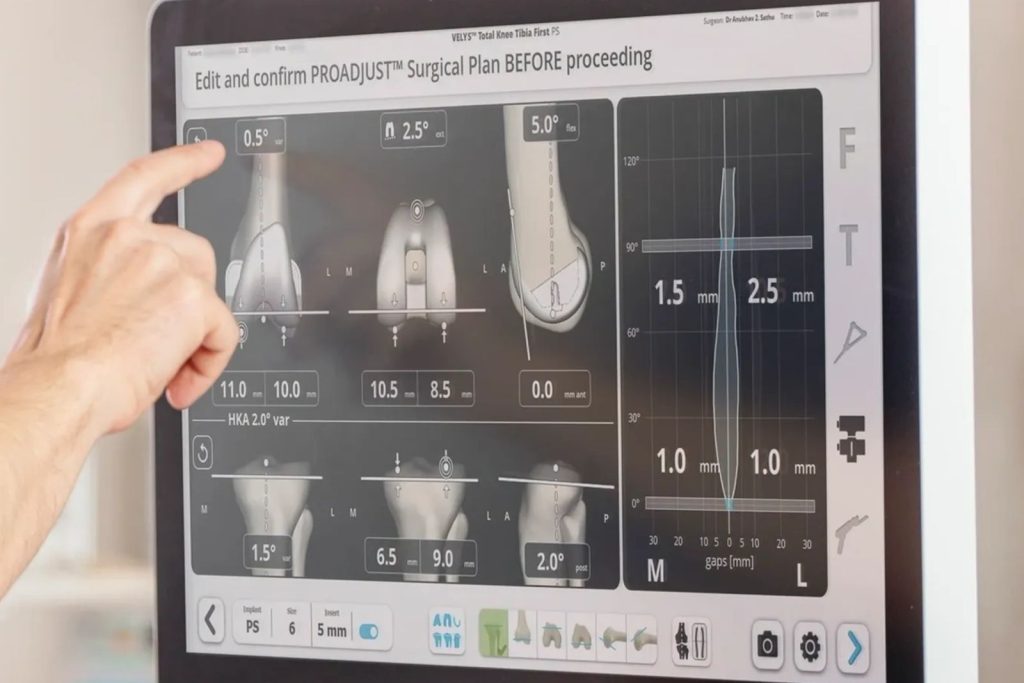
The computer creates a virtual representation of the knee.
The surgeon can then plan:
- implant size
- implant position
- overall alignment
- depth and angle of bone cuts
- ligament balance
The plan can be adjusted according to the patient's individual anatomy and the information obtained during surgery.
5. Robotic-assisted bone preparation
Once the surgical plan has been finalised, robotic assistance is used to help prepare the bone.
Depending on the system, this may involve a robotic cutting guide, robotic arm or another controlled instrument.
The robotic system helps constrain the preparation to the planned area.
The surgeon controls the instruments and remains responsible for every important surgical decision.
6. Trialling and balancing the knee
Trial components are inserted.
The knee is moved through its range of motion while alignment, stability and ligament balance are assessed.
Adjustments can be made when necessary before the final components are inserted.
7. Inserting the knee replacement
The definitive metal femoral and tibial components are inserted, with a durable plastic bearing between them.
The knee is checked again for movement, stability and alignment.
8. Closing the knee
The deeper tissues are repaired with strong sutures and the incision is closed in layers.
I generally use a fine absorbable subcuticular skin suture together with a glued mesh to support the skin during healing.
Preparing for Knee Replacement Surgery in Brisbane
Preparation focuses on health, strength, medications and planning for recovery.
Health optimisation
Before surgery:
- stop smoking or vaping if possible
- optimise diabetes and blood sugar control
- improve general fitness and weight where appropriate
- maintain good nutrition
- tell us about previous blood clots, sleep apnoea, heart or lung conditions
- provide a complete list of medications and supplements
- tell us about previous operations, fractures or implants around the knee
Exercise before knee replacement
Maintaining knee movement and muscle strength can assist rehabilitation after surgery.
The aim is to arrive at surgery as mobile, strong and medically healthy as reasonably possible.
Preparing your home
Arrange help with meals, shopping and transport during early recovery. Remove loose rugs and other trip hazards and make sure frequently used items are easy to access.
Because Brisbane has a warm and humid climate, particularly during summer, consider making sure you have access to a cool, comfortable and preferably air-conditioned environment during early recovery. Apart from making recovery more comfortable, published research has found an association between warmer weather and higher rates of surgical-site infection. Keeping yourself comfortable and your surgical dressing clean and dry is therefore particularly important during Brisbane's warmer months.
Your treating team will also advise which medications should be continued or temporarily stopped.
What to Expect After Robotic Knee Replacement

Recovery is similar to standard knee replacement and requires rehabilitation.
Although robotic technology changes how parts of the operation are planned and performed, the recovery is still the same as from a standard knee replacement.
In hospital
You can expect:
- several different forms of pain relief
- early standing and walking
- physiotherapy and knee exercises
- measures to reduce the risk of blood clots
- progression from a walking frame or crutches as appropriate
Many patients remain in hospital for approximately 1–3 days, although some suitable patients may leave earlier.
First 2–6 weeks
During early recovery:
- walking aids are gradually reduced as strength and confidence improve
- swelling and warmth around the knee are common
- physiotherapy focuses on movement, strength and walking
- the incision is monitored as it heals
- everyday activities are gradually reintroduced
Robotic assistance does not eliminate the normal pain, swelling or rehabilitation associated with knee replacement.
6 weeks to 3 months
Pain, walking and everyday function should progressively improve.
Strength and endurance continue to recover, although some swelling, warmth and stiffness can remain.
3 to 12 months
Improvement can continue for 12 months or longer.
The long-term objective is not for the patient to have a “robotic knee”, but rather a well-positioned, stable and functional knee replacement.
Long-Term Outcomes After Robotic Knee Replacement
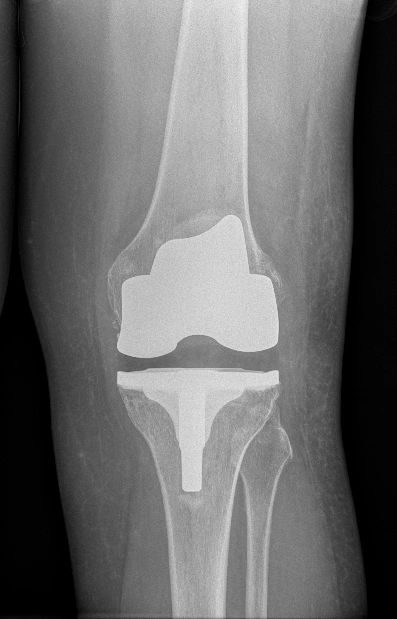
Robotics improves surgical precision, but better long-term outcomes remain uncertain.
Does robotic knee replacement give better results?
This is an important question, and the evidence continues to develop.
Robotic-assisted surgery has consistently demonstrated advantages in surgical precision and alignment accuracy.
For example, a 2024 systematic review and meta-analysis of randomised controlled trials involving 1,942 knees found significantly better anatomical and mechanical alignment with robotic-assisted knee replacement. However, the authors found no statistically significant difference in clinical or functional outcomes or complication rates compared with conventional knee replacement.
Likewise, a systematic overview of ten previous meta-analyses concluded that robotic-assisted knee arthroplasty improves component positioning and alignment, while evidence that it improves clinical scores, patient satisfaction or implant survival remains inconclusive.
This distinction is important.
Robotic assistance can help perform the surgical plan accurately, but it cannot guarantee a better outcome.
Does robotic surgery make a knee replacement last longer?
Accurate implant positioning and appropriate knee balance are logical goals when trying to achieve a durable knee replacement.
However, knee replacements already have good long-term survival, and sufficiently long follow-up is required to determine whether newer robotic technologies reduce revision rates over several decades.
A major systematic review and meta-analysis of long-term knee replacement survival reported that approximately 82% of total knee replacements remained unrevised at 25 years using pooled national joint replacement registry data.
Importantly, the systematic overview of robotic knee arthroplasty research found that the available meta-analyses had not demonstrated a difference in implant survivorship between robotic-assisted and conventional knee arthroplasty.
At present, it would therefore be premature to promise that a robotic knee replacement will last longer than a well-performed conventional knee replacement.
Does robotic knee replacement have additional risks?
Robotic surgery introduces additional equipment and steps into the operation.
Many systems use temporary tracking pins placed into the femur and tibia. These pins allow the robotic system to determine the position of the bones throughout the operation.
A systematic review specifically examining tracking-pin complications in computer-navigated and robotic-assisted knee replacement found that these complications were relatively uncommon. Reported problems included superficial pin-site infection, pin loosening and, rarely, fracture.
These risks need to be considered alongside the potential benefits of the technology.
Robotic technology should therefore be viewed as a surgical tool with potential advantages and limitations, rather than as a risk-free replacement for conventional surgery.
Things to Look Out for After Robotic Knee Replacement
Increasing pain, wound problems, swelling or breathing symptoms need medical review.
The warning signs are essentially the same as after any total knee replacement.
Contact our office, your GP, or seek urgent medical attention if you develop:
Possible infection
- increasing redness or warmth around the incision
- increasing pain after initially improving
- persistent wound leakage or pus
- fever, chills or feeling significantly unwell
Possible blood clot
Seek medical attention for:
- new calf pain or tenderness
- significant one-sided leg swelling
- sudden shortness of breath, chest pain or coughing blood
Sudden breathing symptoms require emergency assessment.
Wound problems
Persistent leakage, opening of the incision or rapidly increasing swelling should be assessed.
Increasing stiffness
Some stiffness is normal during early recovery, but progressive loss of movement or difficulty making progress with rehabilitation should be discussed with your treating team.
Unexpected increasing pain
Pain should generally improve over time. A sudden or progressive increase in pain, particularly after a fall or injury, should be assessed.
Nerve or circulation problems
Increasing weakness or numbness, a cold or pale foot, or severe escalating pain requires urgent medical assessment.
Total Knee Replacement Surgery

Dr Alexey Borshch is a specialist orthopaedic surgeon in Brisbane with a particular clinical focus on surgery of the hip, knee and lower limb.
His practice as a Brisbane Orthopaedic surgeon focuses on the assessment and treatment of knee arthritis, as well as performing knee replacement surgery, which includes both total knee arthroplasty and partial knee replacement.
Dr. Borshch completed his medical degree at the University of Queensland before undertaking specialist orthopaedic training in Queensland. He completed the Australian Orthopaedic Association training program and the Royal Australasian College of Surgeons Fellowship Examination in Orthopaedic Surgery. He obtained specialist registration in Orthopaedic Surgery in 2022 and is a Fellow of the Australian Orthopaedic Association.
He offers consultations in Hamilton, Brisbane, and conducts private orthopaedic surgery at Brisbane Private Hospital.