
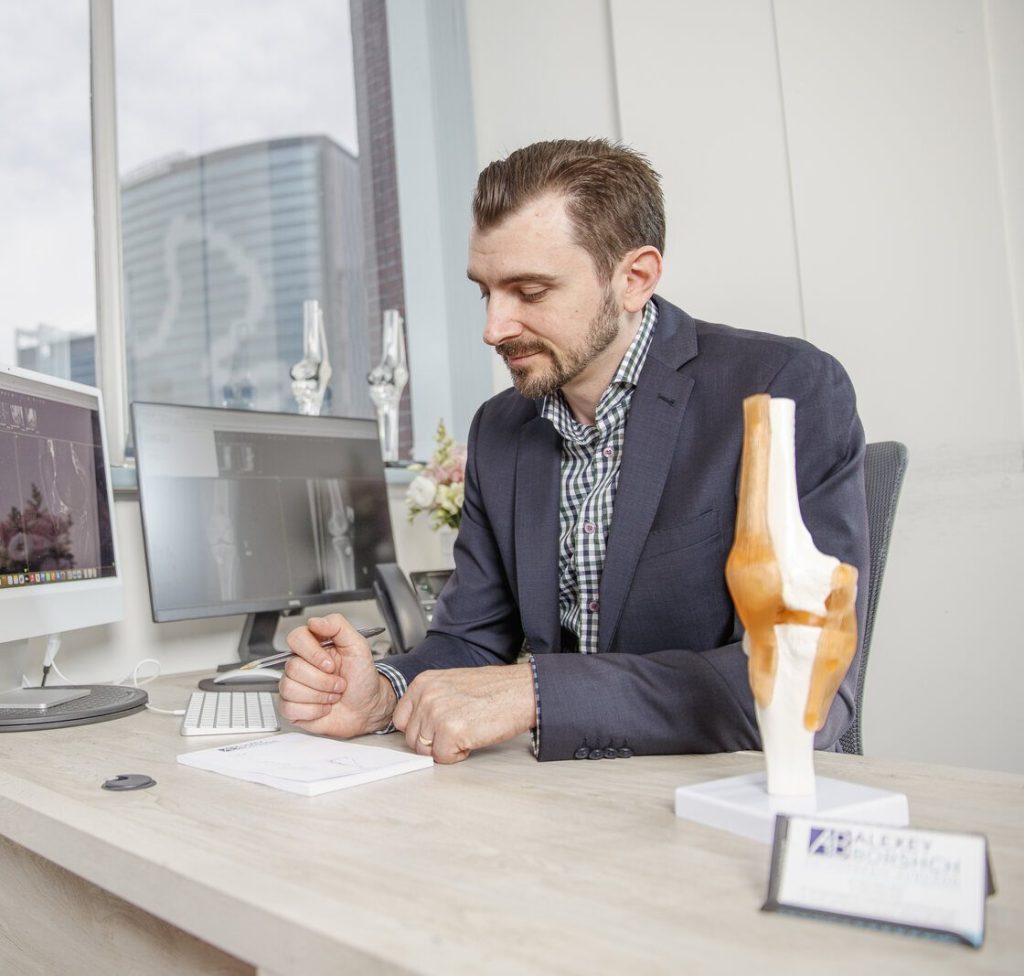
This page provides general information for patients of Dr Borshch, an orthopaedic surgeon consulting in Hamilton, Brisbane, who are being assessed for or undergoing ankle fracture surgery.
Your individual injury and treatment plan may be different, so this information should be used alongside advice from your surgeon and treating team.
What is Ankle Fracture Surgery?
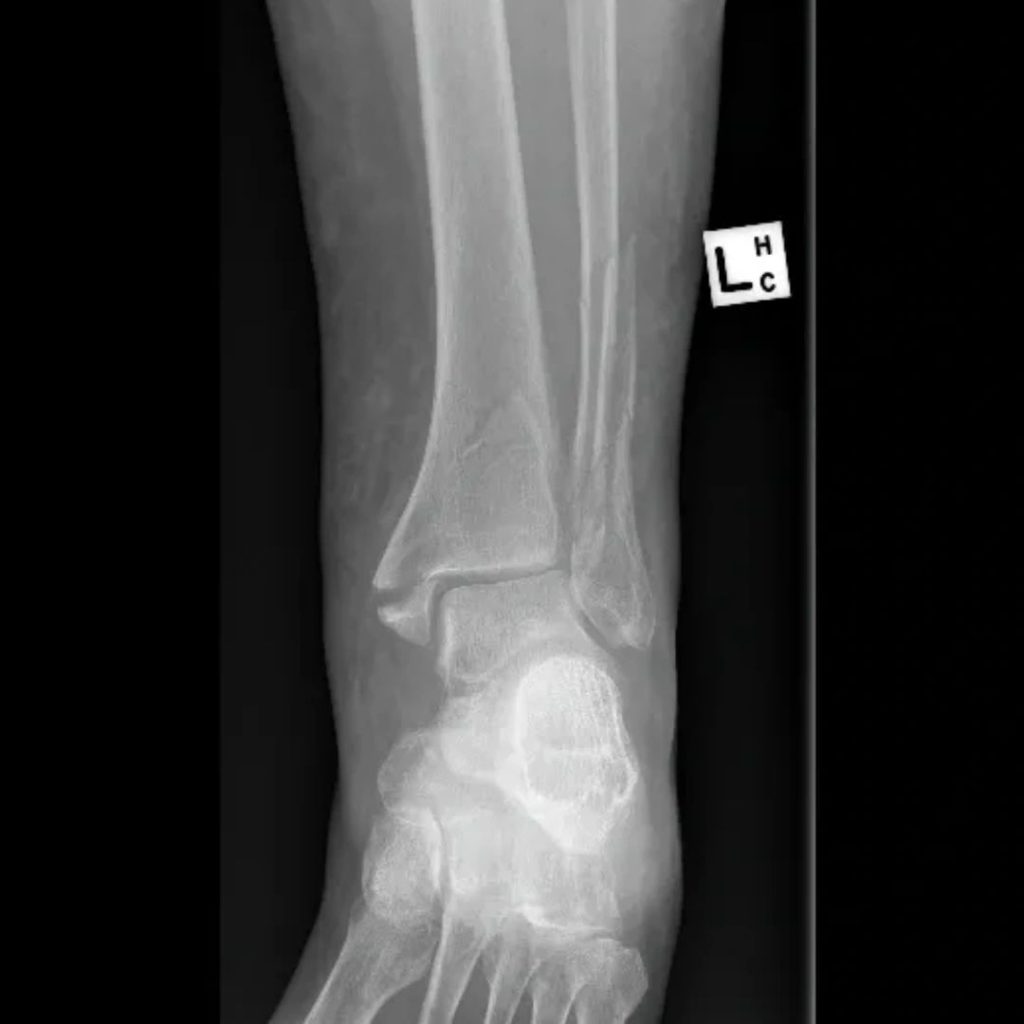
An ankle fracture is a break involving one or more of the bones around the ankle joint.
The ankle is formed by the lower end of the tibia (shin bone), the fibula on the outside of the leg, and the talus beneath them. The prominent areas of bone around the ankle are called the malleoli.
An ankle fracture can involve:
- the lateral malleolus on the outside of the ankle
- the medial malleolus on the inside of the ankle
- the posterior malleolus at the back of the tibia
- two or three of these areas
- the syndesmosis, which is the strong ligament complex holding the tibia and fibula together above the ankle
Not every ankle fracture requires surgery.
Stable fractures that remain appropriately aligned can often be treated successfully in a cast or walking boot. Ankle fracture surgery is generally considered when the injury has caused instability, significant displacement or loss of the normal alignment of the ankle joint.
The aim of surgery is to restore the normal relationship between the bones of the ankle and hold them securely while the fracture heals.
Why is Ankle Fracture Surgery Done?
Ankle fracture surgery may be considered when:
- the fracture has moved significantly out of position
- the ankle joint is unstable
- the talus has shifted within the ankle joint
- both sides of the ankle are injured
- there is an unstable syndesmosis injury
- the fracture cannot be maintained in an acceptable position in a cast or boot
- the ankle has been fractured and dislocated
- the fracture is open, meaning there is a wound communicating with the fracture
The important question is therefore not simply “Is the ankle broken?”, but whether the fracture has disrupted the stability or normal alignment of the ankle.
Not every unstable ankle fracture necessarily requires surgery in every patient. For example, a randomised clinical trial comparing surgery with close-contact casting in adults over 60 with unstable ankle fractures found similar functional outcomes at six months, although loss of fracture position and malunion were more common with casting, while infection and wound problems were more common following surgery.
The decision to proceed with surgery should therefore consider the fracture pattern, displacement, ankle stability, skin and soft tissues, bone quality, general health, activity level and individual patient circumstances.
How is Ankle Fracture Surgery Performed?
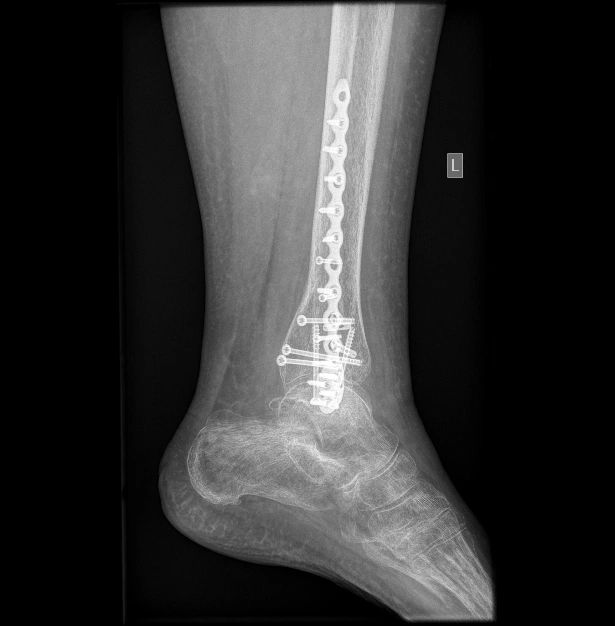
Surgical treatment of an ankle fracture is commonly called open reduction and internal fixation (ORIF).
“Reduction” means restoring the fractured bones to an appropriate position. “Internal fixation” means using implants such as plates and screws to hold the bones securely while they heal.
Anaesthetic
Ankle fracture surgery is usually performed under a general or spinal anaesthetic. A regional nerve block may also be used to provide additional pain relief after surgery.
Restoring the ankle
One or more incisions are made depending on the fracture pattern.
The fractured bones are carefully repositioned with particular attention to restoring the length, rotation and alignment of the ankle joint.
Fixing the fractures
The fractures are stabilised using implants appropriate for the injury.
These may include:
- plates and screws
- individual screws
- specialised plates
- other fixation devices depending on the fracture pattern
A fractured fibula is commonly stabilised with a plate and screws. Medial and posterior malleolar fractures may also require fixation depending on their size, displacement and contribution to ankle stability.
Accurate restoration of ankle anatomy is important. A long-term study of surgically treated malleolar fractures found that anatomical fracture reduction was one of the strongest predictors of a satisfactory outcome more than ten years after surgery.
Assessing the syndesmosis
The syndesmosis is assessed during surgery when the injury pattern suggests it may be unstable.
If required, the tibia and fibula can be stabilised using a syndesmotic screw or flexible suture-button device.
Both are established methods. A meta-analysis of eight randomised controlled trials comparing suture-button and syndesmotic screw fixation found lower complication and unplanned reoperation rates with suture-button fixation, although both techniques remain appropriate in selected circumstances.
The important objective is to restore the normal relationship between the tibia and fibula and provide sufficient stability for healing.
Closing the ankle
Once the fracture position and implants have been checked, the wounds are carefully closed.
The ankle is then protected in a splint, cast or walking boot depending on the injury and fixation.
Preparing for Ankle Fracture Surgery in Brisbane

Unlike elective surgery, an ankle fracture occurs unexpectedly, so there may be limited opportunity to prepare beforehand.
Swelling and the condition of the skin
Ankle fractures can cause considerable swelling.
If the skin is too swollen, surgery may occasionally need to be delayed until the soft tissues are in a safer condition.
While waiting for surgery, you may be advised to:
- elevate the ankle
- use a splint or cast
- avoid weight-bearing
- regularly move your toes
- use prescribed pain relief
Health preparation
Before surgery:
- stop smoking or vaping if possible
- optimise diabetes and blood sugar control
- tell us about blood-thinning medications
- provide a complete list of medications and supplements
- tell us about previous blood clots or anaesthetic problems
- follow the hospital's fasting and medication instructions
Smoking is particularly relevant to fracture surgery. A meta-analysis specifically examining ankle and calcaneal fracture fixation found that smoking was associated with an increased risk of surgical-site infection after fracture fixation.
Preparing your home
You may require crutches, a walking frame or another mobility aid after surgery.
Remove loose rugs and other trip hazards, consider how you will manage stairs, and arrange help with meals, shopping and transport if required.
It is also useful to have somewhere comfortable where you can elevate the ankle, particularly during the first few weeks when swelling is common.
Because Brisbane has a warm and humid climate, particularly during summer, consider making sure you have access to a cool, comfortable and preferably air-conditioned environment during early recovery. Apart from making recovery more comfortable, published research has found an association between warmer weather and higher rates of surgical-site infection. Keeping yourself comfortable and your surgical dressing, cast or boot clean and dry is therefore particularly important during Brisbane's warmer months.
What to Expect After Ankle Fracture Surgery

First 2 weeks
Pain and swelling are expected after an ankle fracture.
During the early recovery period:
- keep the ankle elevated as instructed
- use your prescribed pain relief
- protect the surgical wound
- use crutches or other walking aids as instructed
- regularly move your toes
- follow your individual weight-bearing instructions
Your first review will usually assess the wound, swelling and overall progress.
2–6 weeks
Your rehabilitation depends on the type of fracture and stability achieved during surgery.
Historically, patients were commonly instructed not to put weight through the ankle for approximately six weeks.
There is now good evidence that earlier weight-bearing can be appropriate after stable ankle fracture fixation in selected patients.
The large WAX randomised controlled trial published inThe Lancet compared weight-bearing from two weeks with waiting until six weeks after surgery in 561 patients. Early weight-bearing was at least as safe and resulted in slightly better ankle function at four months, without a significant increase in complications.
However, early weight-bearing is not appropriate for every ankle fracture.
More complex fractures, poor bone quality, some syndesmosis injuries, additional procedures or concerns about fixation or wound healing may require a longer period of protection.
Your weight-bearing instructions will therefore be based on your individual fracture and the stability achieved at surgery.
6 weeks–3 months
As the fracture heals, the focus increasingly moves towards:
- normalising walking
- restoring ankle movement
- improving calf and leg strength
- balance and proprioception exercises
- gradually returning to normal activities
Follow-up X-rays are used when appropriate to assess fracture healing and alignment.
3–12 months
The bone may unite well before the ankle feels completely normal.
Swelling, stiffness, weakness and reduced endurance can continue for several months, particularly after more severe fractures.
Improvement can continue for 12 months or longer.
Long-Term Outcomes After Ankle Fracture Surgery
Fracture healing and function
Most appropriately treated ankle fractures heal and allow patients to return to normal everyday activities.
The eventual outcome depends on several factors, including:
- severity of the original injury
- damage to the cartilage
- quality of fracture reduction
- syndesmosis injury
- bone quality
- complications
- rehabilitation
More complex fractures generally take longer to recover and may not regain exactly the same function as the ankle had before the injury.
A mid- to long-term study examining outcomes after ankle fracture fixation found that increasing fracture complexity was associated with poorer functional outcomes and that patients with malreduced fractures had significantly worse function.
Post-traumatic ankle arthritis
An ankle fracture does not only injure bone. The force causing the fracture can also damage the cartilage lining the ankle joint.
For this reason, some patients develop post-traumatic ankle arthritis years after the fracture, even when the bones have healed.
The risk is generally greater after more severe injuries, particularly where there has been substantial cartilage damage, dislocation or difficulty restoring normal joint alignment.
This is one reason why the objective of ankle fracture surgery is not simply to make the bone unite, but to restore the shape and alignment of the ankle joint as accurately as reasonably possible.
Do plates and screws need to be removed?
In most patients, plates and screws can remain permanently.
They do not routinely need to be removed simply because the fracture has healed.
Removal may occasionally be considered if an implant becomes prominent or painful, causes tendon or soft-tissue irritation, becomes infected, or needs to be removed for another reason.
Things to Look Out for After Ankle Fracture Surgery

Contact our office, your GP, or seek urgent medical attention if you develop:
Possible infection
- increasing redness or warmth around the incision
- increasing pain after initially improving
- persistent wound leakage or pus
- fever or feeling significantly unwell
An infection following ankle fracture surgery can involve the skin, deeper tissues or implants and should be assessed promptly.
Possible blood clot
Seek medical attention for:
- new calf pain or tenderness
- significant one-sided leg swelling
- sudden shortness of breath, chest pain or coughing blood
Sudden breathing symptoms require emergency assessment.
Increasing swelling or pressure
Some swelling is expected after ankle fracture surgery.
Seek assessment if swelling becomes rapidly worse, the cast or splint feels excessively tight, or pain becomes severe despite elevation and medication.
Wound problems
Please contact us for persistent leakage, opening of the incision, significant blistering or rapidly increasing swelling around the wound.
Nerve or circulation problems
Increasing numbness, inability to move the toes, or a foot that becomes cold, pale or blue requires urgent assessment.
New injury or loss of fixation
A fall or unexpected load through the ankle can potentially disturb the fracture before it has healed.
A sudden increase in pain, new deformity or significant deterioration in your ability to use the ankle following another injury should be assessed.
Ankle Fracture Surgery

Dr Alexey Borshch is a specialist orthopaedic surgeon in Brisbane with a particular clinical focus on surgery of the hip, knee and lower limb.
His practice as a Brisbane orthopaedic surgeon includes the assessment and treatment of ankle injuries, including stable and unstable ankle fractures, syndesmosis injuries and other traumatic conditions of the lower limb.
Dr. Borshch completed his medical degree at the University of Queensland before undertaking specialist orthopaedic training in Queensland. He completed the Australian Orthopaedic Association training program and the Royal Australasian College of Surgeons Fellowship Examination in Orthopaedic Surgery. He obtained specialist registration in Orthopaedic Surgery in 2022 and is a Fellow of the Australian Orthopaedic Association.
He offers consultations in Hamilton, Brisbane, and conducts private orthopaedic surgery at Brisbane Private Hospital.