
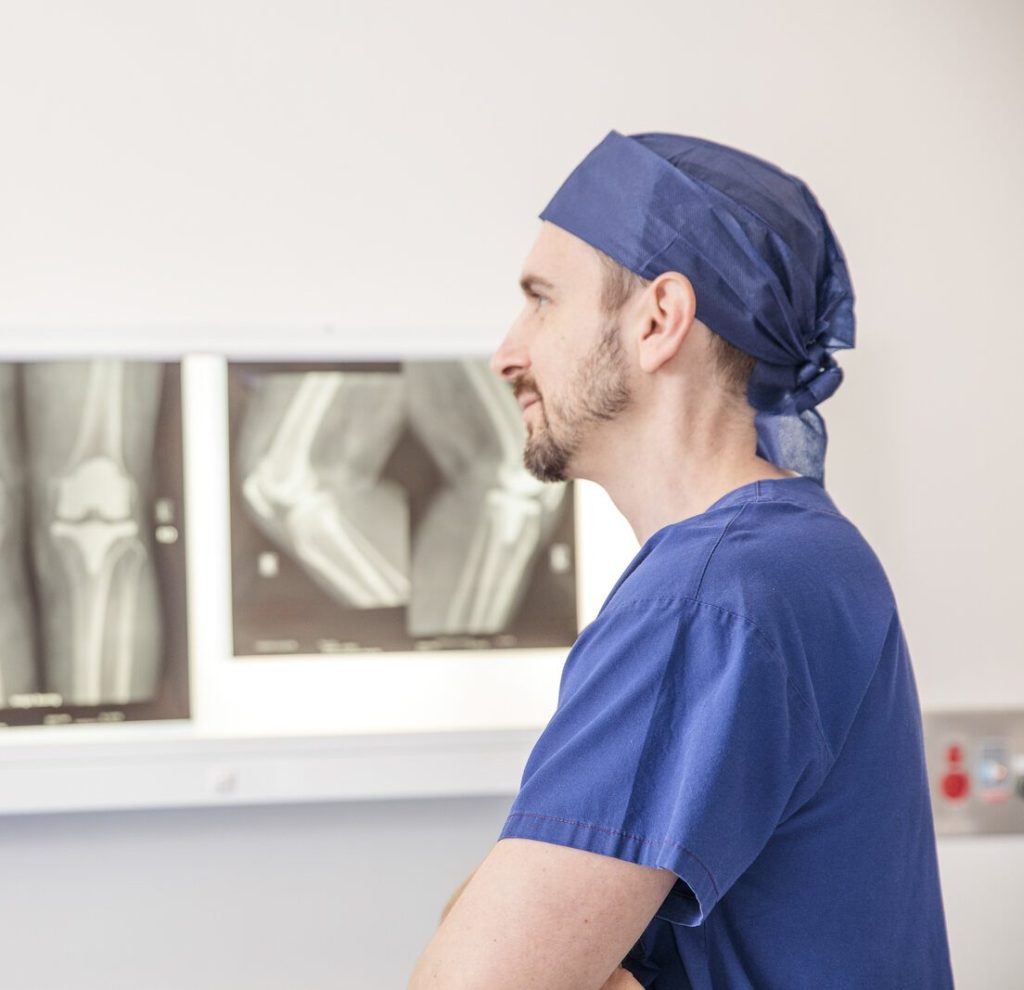
This page provides general information for patients of Dr Borshch, an orthopaedic surgeon consulting in Hamilton, Brisbane, who are being assessed for or considering PCL reconstruction surgery.
Your individual injury and treatment plan may be different, so this information should be used alongside advice from your surgeon and treating team.
What is PCL Reconstruction Surgery?
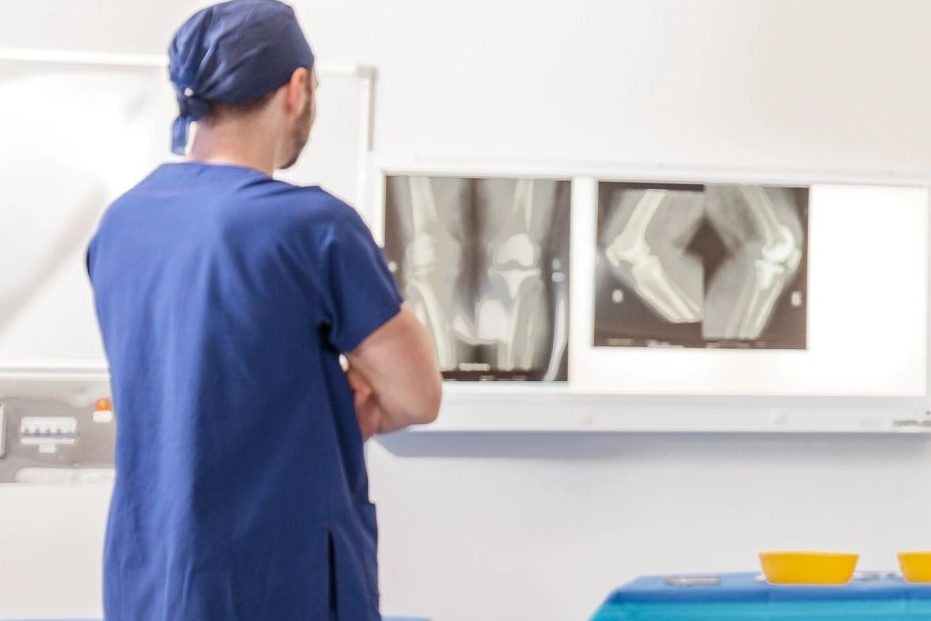
The posterior cruciate ligament (PCL) is one of the major stabilising ligaments inside the knee.
It connects the femur (thigh bone) to the tibia (shin bone) and is particularly important in preventing the tibia from moving backwards relative to the femur.
The PCL is a substantial ligament consisting of two functional bundles and works together with the other ligaments, muscles and structures around the knee to maintain stability.
PCL injuries can occur following:
- a direct impact to the front of a bent knee
- a sporting injury
- a fall onto a flexed knee
- hyperextension or twisting of the knee
- a motor vehicle accident, classically when the shin strikes the dashboard
- a more severe knee injury involving several ligaments
Unlike an ACL injury, an isolated PCL tear can sometimes cause relatively subtle symptoms.
Patients may experience pain and swelling initially, followed by symptoms such as:
- a feeling that the knee is unstable
- difficulty slowing down or walking downhill
- difficulty descending stairs
- reduced confidence during sport
- discomfort at the front or inside of the knee
- difficulty with higher-demand activities
Importantly, a PCL tear does not automatically require surgery.
Many isolated PCL injuries can be treated successfully with specialised rehabilitation.
When significant symptomatic instability persists, or when the PCL injury forms part of a more complex ligament injury, PCL reconstruction may be considered.
Why is PCL Reconstruction Surgery Done?
The decision to reconstruct a PCL depends on considerably more than the appearance of the ligament on an MRI scan.
Assessment considers:
- the degree of posterior knee instability
- symptoms during everyday activities
- sporting and occupational requirements
- whether the injury is isolated or involves other ligaments
- knee alignment
- meniscus and cartilage injuries
- response to appropriate rehabilitation
- how long the injury has been present
Does every PCL tear require surgery?
No.
This is an important difference between recognising a PCL injury and deciding that it requires reconstruction.
A review of non-operative treatment and the natural history of PCL injuries found that good subjective outcomes and high rates of return to sport have been reported following non-operative treatment of isolated PCL injuries.
A long-term study of patients with acute isolated PCL injuries treated without surgery similarly found that many patients remained active with good strength, knee movement and patient-reported outcomes at a minimum of ten years.
Rehabilitation is therefore an important part of the initial treatment of many isolated PCL injuries.
When might reconstruction be considered?
PCL reconstruction may be considered when there is:
- persistent symptomatic posterior instability despite appropriate rehabilitation
- a high-grade PCL injury producing substantial functional instability
- difficulty returning to required sporting or occupational activities
- a combined injury involving the PCL and other knee ligaments
- chronic PCL deficiency producing significant functional symptoms
Some acute injuries involving a piece of bone pulled away with the ligament – an avulsion fracture – may be suitable for direct fixation rather than ligament reconstruction.
Combined ligament injuries also need to be considered differently from an isolated PCL tear.
The aim is therefore not to reconstruct every injured PCL, but to identify the patients in whom persistent instability is causing a meaningful functional problem that reconstruction may address.
How is PCL Reconstruction Surgery Performed?
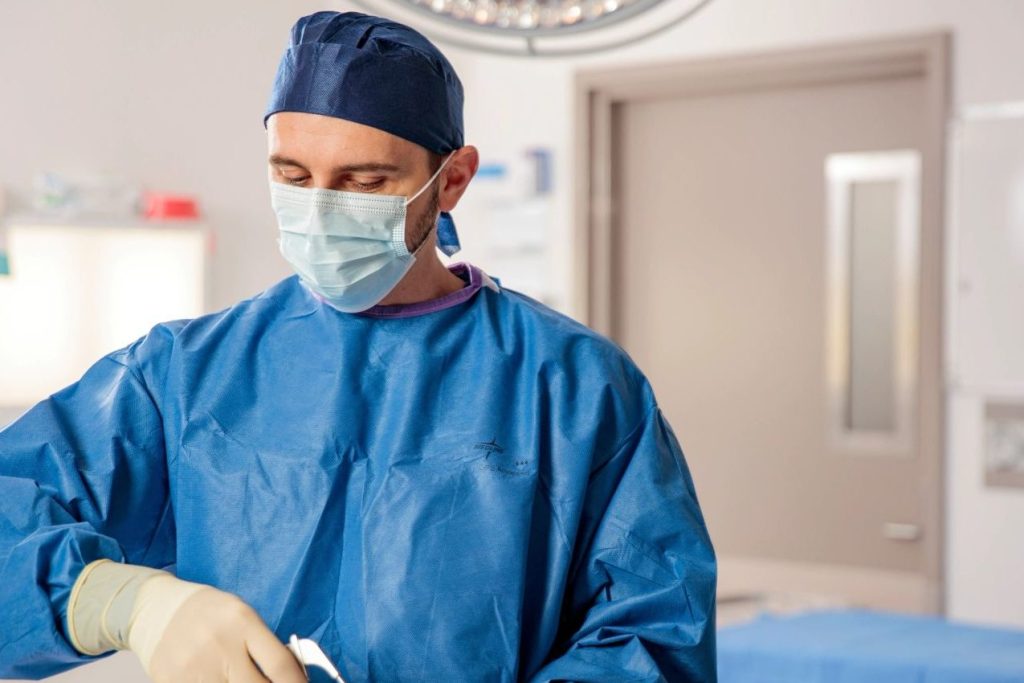
PCL reconstruction usually involves arthroscopic or keyhole surgery, together with small additional incisions.
Rather than simply stitching together a chronically torn ligament, a tendon graft is used to reconstruct the PCL.
Anaesthetic
The operation is usually performed under a general anaesthetic. Additional local anaesthetic or regional nerve blocks may be used to assist with postoperative pain relief.
Arthroscopy
A small camera is inserted into the knee.
This allows assessment of:
- the PCL
- ACL
- menisci
- cartilage surfaces
- other structures inside the knee
Associated meniscus or cartilage injuries can be treated where appropriate.
Choosing the graft
A new PCL is constructed using a tendon graft.
Depending on the individual reconstruction, graft options can include the patient's own tissue (autograft) or donor tissue (allograft).
A 2023 systematic review and meta-analysis comparing allograft with autograft for primary PCL reconstruction found no significant differences in patient-reported outcomes, range of movement, activity scores or several measurements of knee stability between the groups.
An earlier systematic review comparing autograft and allograft PCL reconstruction found slightly less measured posterior laxity with autograft, although the clinical significance was uncertain and patient-reported improvements were broadly similar.
There is therefore no single graft that is necessarily appropriate for every PCL reconstruction.
Graft choice depends on the individual injury, whether other ligaments also require reconstruction, available autograft tissue, previous surgery and patient-specific factors.
Reconstructing the PCL
Bone tunnels are created at the anatomical attachment areas of the PCL on the tibia and femur.
The graft is passed through these tunnels and secured with specialised fixation devices.
Particular attention is required when positioning and tensioning the graft because the PCL controls posterior movement of the tibia throughout knee flexion.
The reconstructed ligament is checked for stability before the procedure is completed.
Combined ligament reconstruction
PCL injuries can occur together with injuries to structures such as the:
- ACL
- medial collateral ligament
- posterolateral corner
- other stabilising structures around the knee
In a multiligament knee injury, restoring stability may therefore require reconstruction or repair of more than one ligament.
These operations are individually planned according to the structures damaged rather than treating the PCL in isolation.
Preparing for PCL Reconstruction Surgery in Brisbane

PCL reconstruction is usually not an emergency operation in an isolated injury.
This provides an opportunity to prepare the knee before surgery.
Rehabilitation before surgery
Where appropriate, pre-operative rehabilitation aims to:
- reduce swelling
- restore knee movement
- regain full knee extension
- improve quadriceps strength
- normalise walking
- maintain general fitness
The quadriceps muscles are particularly important in PCL rehabilitation because they can help control the tibia and compensate for posterior instability.
Health preparation
Before surgery:
- stop smoking or vaping if possible
- maintain good nutrition
- optimise diabetes and other medical conditions
- maintain general fitness where possible
- provide a complete list of medications and supplements
- tell us about previous blood clots or anaesthetic problems
- arrange physiotherapy for postoperative rehabilitation
Preparing your home
PCL rehabilitation generally involves a period of protection after surgery.
You may require crutches and a knee brace.
Arrange help with shopping, meals and transport if required and remove obvious trip hazards from your home.
Because Brisbane has a warm and humid climate, particularly during summer, consider making sure you have access to a cool, comfortable and preferably air-conditioned environment during early recovery. Apart from making recovery more comfortable, a large meta-analysis found an association between warmer weather and higher rates of surgical-site infection. Keeping yourself comfortable and your surgical dressings clean and dry is therefore particularly important during Brisbane's warmer months.
What to Expect After PCL Reconstruction

Rehabilitation following PCL reconstruction differs in several important ways from rehabilitation following ACL reconstruction.
The early priority is to protect the reconstructed PCL from excessive posterior forces while the graft begins to heal.
A systematic review of rehabilitation following PCL reconstruction highlighted protection of the graft during early strengthening as an important principle, while also finding that high-quality evidence defining one ideal rehabilitation protocol remains limited.
First 2 weeks
Early priorities generally include:
- controlling pain and swelling
- protecting the reconstruction
- regaining full knee extension
- gradually restoring appropriate knee flexion
- activating the quadriceps
- using crutches as instructed
- using a brace when prescribed
Weight-bearing instructions depend on the reconstruction and whether other ligaments, menisci or cartilage have also been treated.
2–6 weeks
Rehabilitation continues to protect the PCL while progressively restoring movement and quadriceps function.
A brace may continue to be used.
Exercises are carefully selected to avoid excessive posterior movement of the tibia.
An important difference from ACL rehabilitation is that hamstring strengthening is often deliberately delayed, because contraction of the hamstrings can pull the tibia backwards and increase forces on the healing PCL graft.
A review of published PCL reconstruction rehabilitation protocols found that most protocols used a brace for approximately 6–8 weeks and commonly delayed active hamstring exercises during early rehabilitation.
6 weeks–3 months
As graft healing progresses, rehabilitation can increasingly focus on:
- normalising walking
- progressive quadriceps strengthening
- restoring knee movement
- balance and proprioception
- hip and core strength
- cardiovascular conditioning
Hamstring exercises can be introduced progressively when appropriate.
3–6 months
Strengthening becomes increasingly demanding.
Depending on progress, rehabilitation may include:
- progressive resistance training
- single-leg exercises
- cycling
- running progression
- balance and movement control
- sport-specific preparation
6–12 months and return to sport
Returning to pivoting, contact or high-demand sport requires restoration of:
- strength
- endurance
- knee stability
- movement control
- confidence
- sport-specific function
Return to sport should therefore be criteria-based as well as time-based.
PCL rehabilitation can be prolonged, particularly following a combined ligament reconstruction.
Long-Term Outcomes After PCL Reconstruction
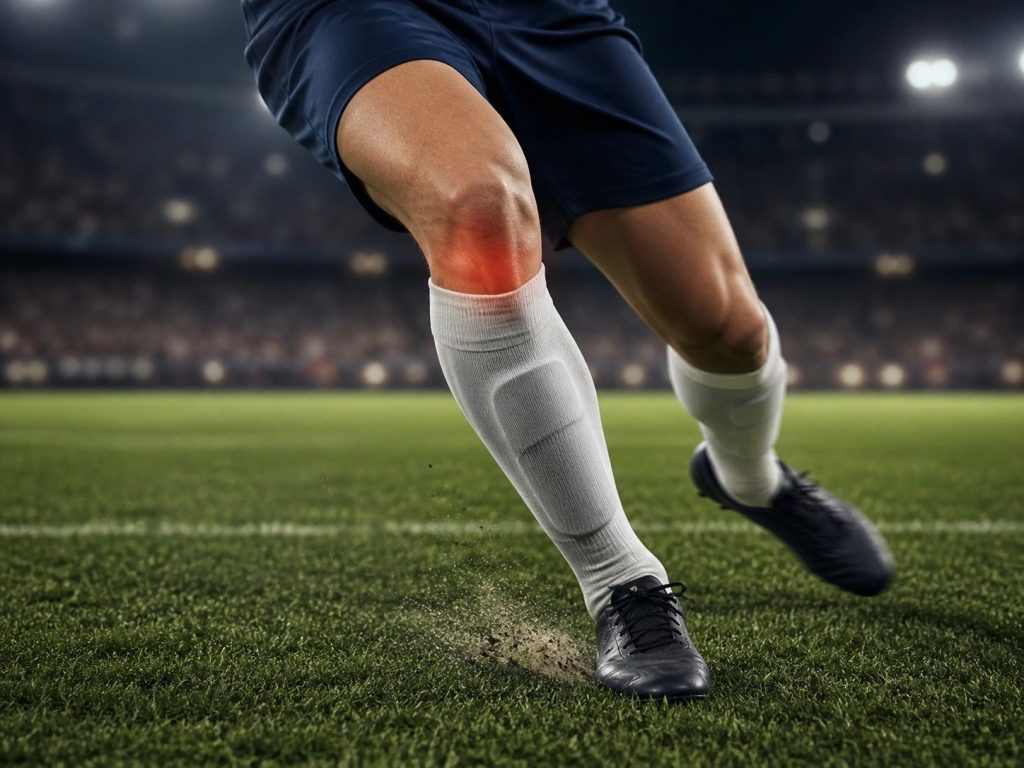
Knee stability and function
PCL reconstruction can improve knee stability and function in appropriately selected patients with symptomatic PCL deficiency.
A systematic review and meta-analysis of isolated PCL reconstruction found significant improvements in functional outcome scores and objective knee stability following reconstruction.
However, a reconstructed PCL does not necessarily make the knee identical to a knee that has never been injured.
Some residual posterior laxity can remain despite technically successful surgery.
Return to sport
Return to sport following PCL reconstruction is less extensively studied than after ACL reconstruction.
The same systematic review and meta-analysis of isolated PCL reconstruction found substantial improvements in activity and functional scores but reported that approximately 44% returned to their pre-injury level of sport across the included studies.
This figure should be interpreted cautiously.
Many patients included in the literature underwent reconstruction months or even years after their original injury, and the available studies are heterogeneous.
It therefore describes a population of patients rather than predicting what will happen for an individual.
Does PCL reconstruction prevent arthritis?
A PCL-deficient knee has altered biomechanics.
Over time, this can increase loading particularly within the medial and patellofemoral compartments of the knee.
Long-term osteoarthritis has been reported after both treated and untreated PCL injuries.
However, PCL reconstruction should not be presented as an operation that has been proven to prevent future arthritis.
The primary purpose of reconstruction is to restore useful stability and function to a symptomatic unstable knee.
Things to Look Out for After PCL Reconstruction
Contact our office, your GP, physiotherapist, or seek urgent medical attention if you develop:
Possible infection
- increasing redness or warmth around the wounds
- increasing pain after initially improving
- persistent wound leakage
- pus or unusual discharge
- fever, chills or feeling significantly unwell
Possible blood clot
Seek medical attention for:
- new calf pain or tenderness
- significant one-sided leg swelling
- sudden shortness of breath
- chest pain or coughing blood
Sudden breathing symptoms require emergency assessment.
Increasing stiffness
Regaining knee movement is an important part of rehabilitation.
Progressive stiffness or difficulty regaining knee extension should be discussed with your treating team.
Persistent swelling
Some swelling is expected following surgery.
Repeated substantial swelling as exercise increases may indicate that rehabilitation is progressing faster than the knee currently tolerates.
New instability or injury
A significant fall, twisting injury, hyperextension injury or direct impact during rehabilitation can potentially damage the reconstruction.
A new episode of instability, sudden swelling or significant increase in pain should be assessed.
Difficulty progressing rehabilitation
PCL reconstruction requires a relatively structured rehabilitation program.
Persistent weakness, pain, instability or difficulty progressing through rehabilitation should be discussed with your physiotherapist and surgeon.
Procedures explained
PCL Reconstruction Surgery

Dr Alexey Borshch is a specialist orthopaedic surgeon in Brisbane with a particular clinical focus on surgery of the knee, hip, ankle and lower limb.
His practice as a Brisbane knee surgeon includes the assessment and treatment of PCL injuries, ACL injuries, meniscus tears, cartilage injuries, patellar instability and other sporting and traumatic conditions of the knee.
When PCL reconstruction is appropriate, graft choice and reconstruction technique are selected according to the individual injury. More complex injuries may require treatment of the PCL together with other damaged ligaments or structures around the knee.
Dr. Borshch completed his medical degree at the University of Queensland before undertaking specialist orthopaedic training in Queensland. He completed the Australian Orthopaedic Association training program and the Royal Australasian College of Surgeons Fellowship Examination in Orthopaedic Surgery. He obtained specialist registration in Orthopaedic Surgery in 2022 and is a Fellow of the Australian Orthopaedic Association.
He offers consultations in Hamilton, Brisbane, and conducts private orthopaedic surgery at Brisbane Private Hospital.