Revision and Complex Knee Replacement
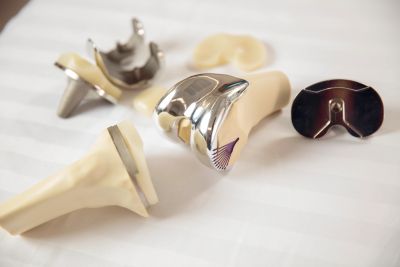
Revision & Complex Primary Knee Replacement – Brisbane & Hamilton
This page provides general information for patients of Dr Borshch, an orthopaedic surgeon consulting in Hamilton, Brisbane, who are being assessed for or considering revision knee replacement or complex primary knee replacement surgery. These operations are usually more complex than a standard first knee replacement, and the exact surgery and recovery will depend on the individual problem. This information should therefore be used alongside advice from your surgeon and treating team.

What is Revision or Complex Primary Knee Replacement Surgery?
A revision knee replacement is an operation performed when a previous knee replacement develops a problem that requires further surgery.
A complex primary knee replacement is still a patient's first knee replacement, but there are additional factors that make the operation more complicated than a standard total knee replacement.
These may include:
- severe bow-legged or knock-kneed deformity
- significant bone loss or abnormal bone anatomy
- previous fractures or surgery around the knee
- retained plates, screws or other implants
- significant ligament damage or instability
- severe stiffness
- unusual anatomy
- previous infection
In these situations, specialised surgical techniques or revision-style knee replacement implants may be required even though it is the patient's first knee replacement.
The aims of revision and complex knee replacement surgery are to:
- reduce pain
- correct significant deformity
- restore knee stability and alignment
- improve movement and walking
- reconstruct areas of damaged or missing bone
- treat problems affecting an existing knee replacement
Why is Revision or Complex Knee Replacement Done?
Revision knee replacement
A knee replacement can function well for many years, but occasionally problems develop that require further surgery.
Common reasons include:
- loosening of the knee replacement from the bone
- infection around the knee replacement
- instability, where the knee feels loose or gives way
- significant wear of the plastic components
- problems with implant position or alignment
- significant persistent stiffness
- fracture around the knee replacement
- failure or breakage of an implant
A published review of worldwide joint replacement registry data identified loosening and infection among the major reasons for revision knee replacement surgery.
Importantly, pain after a knee replacement does not automatically mean another knee replacement is required. Before recommending revision surgery, it is important to establish the likely cause of the symptoms and determine whether another operation is likely to correct it.
Complex primary knee replacement
Sometimes a patient who has never had a knee replacement already has a particularly challenging knee.
For example, severe arthritis may have gradually produced substantial deformity and bone loss. Previous fractures may have healed with abnormal alignment, or previous operations may have changed the normal anatomy of the knee.
In these circumstances, a standard knee replacement may not provide enough fixation or stability. More specialised techniques may therefore be required to reconstruct the knee appropriately.
How is Revision & Complex Primary Knee Replacement Surgery Performed?
Every complex knee replacement is different. Careful planning is therefore particularly important.
This usually involves standing X-rays and may also include CT scans, blood tests, joint aspiration or other investigations depending on the problem.
1. Anaesthetic
A spinal or general anaesthetic may be used, together with additional methods of pain relief around the knee. A urinary catheter is often placed due to the extended duration of the surgery.
2. Accessing and assessing the knee
For revision surgery, the previous incision can often be used to access the joint. Scar tissue is carefully released or removed and the existing implants, bone and ligaments are assessed.
During complex primary knee replacement, deformity, bone loss and ligament stability are carefully assessed as the knee is reconstructed.
3. Removing previous implants when required
During revision surgery, only part of the existing knee replacement may sometimes need to be changed.
For a major revision, the femoral and tibial components are carefully removed while trying to preserve as much healthy bone as possible.
Previous plates, screws or other implants may also need to be removed during complex primary surgery if they interfere with the knee replacement.
4. Reconstructing bone and restoring alignment
Complex knee replacement surgery may require techniques beyond those used for a routine knee replacement.
These can include:
- longer stems extending into the thigh bone or shin bone
- metal cones, sleeves or augments to reconstruct areas of missing bone
- bone graft in selected situations
- specialised implants to compensate for damaged ligaments
- more constrained knee replacements when additional stability is required
The aim is to reconstruct the knee so that the implants are securely fixed and the knee is appropriately aligned, balanced and stable throughout its range of movement.
5. Revision for infection
Revision surgery for an infected knee replacement can be quite different.
Treatment may involve removing the existing implants, thoroughly cleaning the joint and using antibiotics.
Depending on the infection and individual circumstances, a new knee replacement may sometimes be inserted during the same operation. In other situations, a temporary antibiotic spacer is inserted and the definitive replacement is performed during a later operation.
6. Closing the knee
The deeper tissues are repaired using strong sutures and the incision is closed in several layers with absorbable sutures.
I generally close the skin with a fine absorbable suture underneath the skin and use a glued mesh over the incision. This provides additional support while the skin heals.
Preparing for Complex or Revision Knee Replacement Surgery in Brisbane
Preparation is particularly important because revision and complex primary knee replacement can be larger and more demanding operations than a routine first knee replacement.
Health optimisation
Before surgery:
- stop smoking or vaping if possible
- optimise diabetes and blood sugar control
- work on general fitness and weight where appropriate
- maintain good nutrition
- tell us about previous infections or wound-healing problems
- tell us about previous blood clots, sleep apnoea, heart or lung problems
- provide a complete list of medications and supplements
If infection is suspected, additional investigations may be required before surgery.
Exercise before complex knee replacement
Maintaining knee movement and muscle strength before surgery can assist rehabilitation afterwards.
The amount of exercise possible will depend on your knee. The aim is to remain as mobile and strong as reasonably possible without significantly aggravating your symptoms.
Preparing your home
Complex knee replacement recovery can sometimes take longer than recovery from a routine knee replacement. Arrange help with meals, shopping, transport and household activities, and remove potential trip hazards.
Because Brisbane has a warm and humid climate, particularly during summer, consider making sure you have access to a cool, comfortable and preferably air-conditioned environment during your early recovery. Apart from making recovery more comfortable, published research has found an association between warmer weather and higher rates of surgical-site infection, while Australian research has identified seasonal and climatic variation in infection following knee replacement surgery. Keeping yourself comfortable and your surgical dressing clean and dry is therefore particularly important during Brisbane's warmer months.
Your treating team will also advise which medications should be continued or temporarily stopped.
What to Expect After Revision or Complex Knee Replacement
In hospital
Hospital stay varies depending on the complexity of the reconstruction.
You can expect:
- a combination of different forms of pain relief
- early mobilisation with physiotherapy when appropriate
- exercises to restore movement and muscle function
- measures to reduce the risk of blood clots
- antibiotics when required
Some patients can place full weight through the leg relatively early, while others may need protected or restricted weight-bearing to allow bone reconstruction, fractures or other repairs to heal.
First 2–6 weeks
Your early review focuses on wound healing, pain, swelling, movement and your ability to walk safely.
A frame, crutches or walking stick may be required during early recovery.
Swelling, warmth and stiffness are common. Physiotherapy is tailored to the reconstruction performed and may sometimes need to progress more cautiously than after a routine total knee replacement.
6 weeks to 3 months
Walking, movement and strength should progressively improve.
Recovery varies considerably. A relatively straightforward revision may recover faster than a complex reconstruction involving significant bone loss, deformity or infection.
3 to 12 months
Improvement in strength, walking, pain and confidence can continue for 12 months or longer.
Complex knee replacement recovery requires patience. Steady individual improvement is generally more useful than comparing your recovery with someone who has undergone a routine knee replacement.
Long-Term Outcomes After Complex & Revision Knee Replacement
Pain relief and function
Revision knee replacement can provide meaningful improvement in pain and function when the cause of failure has been correctly identified and can be addressed surgically.
A systematic review and meta-analysis of patient-reported outcomes following revision knee replacement found significant and sustained improvement compared with patients' pre-operative state at follow-up beyond five years.
However, outcomes following revision surgery are generally less predictable than after a routine first knee replacement.
For complex primary knee replacement, the expected outcome depends heavily on why the operation is complex. A severely deformed but otherwise healthy knee is a different problem from a knee affected by previous infection, major trauma or extensive bone loss.
How long does a revision knee replacement last?
The longevity of a revision knee replacement varies according to the reason for revision, amount of bone loss, presence of infection, type of implant required and number of previous operations.
One long-term study of first revision knee replacements reported approximately 89% implant survivorship at an average follow-up of 11 years.
These figures describe groups of patients and cannot predict how long an individual knee replacement will last.
Repeat revision surgery
Each additional revision can become more difficult because there may be progressively less bone, more scar tissue and greater damage to the surrounding soft tissues.
This makes careful investigation, planning and treatment of the underlying problem particularly important.
Things to Look Out for After Complex or Revision Knee Replacement
Contact our office, your GP, or seek urgent medical attention if you develop:
Possible infection
- increasing redness or warmth around the incision
- increasing pain after initially improving
- persistent wound leakage
- pus or unusual discharge
- fever, chills or feeling significantly unwell
Infection is particularly important following revision surgery. Large registry research has demonstrated that revision knee replacement carries a higher risk of infection than primary knee replacement.
Possible blood clot
Seek medical attention for:
- new calf pain or tenderness
- significant one-sided leg swelling
- sudden shortness of breath, chest pain or coughing blood
Sudden breathing symptoms require emergency assessment.
Wound problems
Persistent wound leakage, opening of the incision or rapidly increasing swelling should be assessed promptly.
Knee stiffness
Some stiffness is expected, but progressive loss of movement or difficulty making progress with physiotherapy should be discussed with your treating team.
New instability or increasing pain
A new feeling of the knee giving way, a sudden change in function, or pain that becomes progressively worse rather than better should be assessed.
Nerve or circulation problems
Increasing weakness or numbness, a cold or pale foot, or severe escalating pain requires urgent medical assessment.
Revision Knee Replacement Brisbane

Dr Alexey Borshch is a specialist orthopaedic surgeon in Brisbane with a particular clinical focus on surgery of the hip, knee and lower limb.
His practice as a Brisbane orthopedic surgeon focuses on the assessment and treatment of knee arthritis, as well as performing knee replacement surgery and revision knee replacement surgery.
Dr. Borshch completed his medical degree at the University of Queensland and later underwent specialist orthopaedic training in Queensland, achieving Fellowship status with the Royal Australasian College of Surgeons in Orthopaedic Surgery.
He offers consultations in Hamilton, Brisbane, and conducts private orthopaedic surgery at Brisbane Private Hospital.