
What is a posterolateral corner reconstruction?
The posterolateral corner (PLC) is a group of ligaments and tendons at the outer back part of the knee ("postero" means back and "lateral" means outside). Its three main stabilisers are the lateral (fibular) collateral ligament, a strong cord that runs down the outside of the knee from the thigh bone (femur) to the top of the fibula (the thin bone on the outside of the lower leg); the popliteus tendon; and the popliteofibular ligament. Together they stop the outside of the knee opening up when the knee is pushed into a bow-legged position (varus), and stop the shin bone (tibia) rotating outwards too far (PMID 15310564). A complete (grade III) PLC injury often occurs together with a tear of the anterior or posterior cruciate ligament: in one study of 64 people treated for this injury, 46 also needed a cruciate ligament reconstruction (PMID 20048091).
A posterolateral corner reconstruction replaces these torn structures with new tendon grafts. In the LaPrade technique, two grafts are used to rebuild all three main stabilisers in their original anatomical positions, fixed through two tunnels in the thigh bone, one in the fibula and one in the shin bone (PMID 15310564; PMID 40414466). The new lateral collateral ligament graft runs in the same line as the original ligament along the outside of the knee. The grafts can come from your own hamstring tendons or from a donor (allograft), with similar rates of graft failure (PMID 38840793). The operation is done through an incision along the outside of the knee, and it is often combined with an ACL reconstruction or PCL reconstruction and a knee arthroscopy to assess and treat other injuries inside the joint.
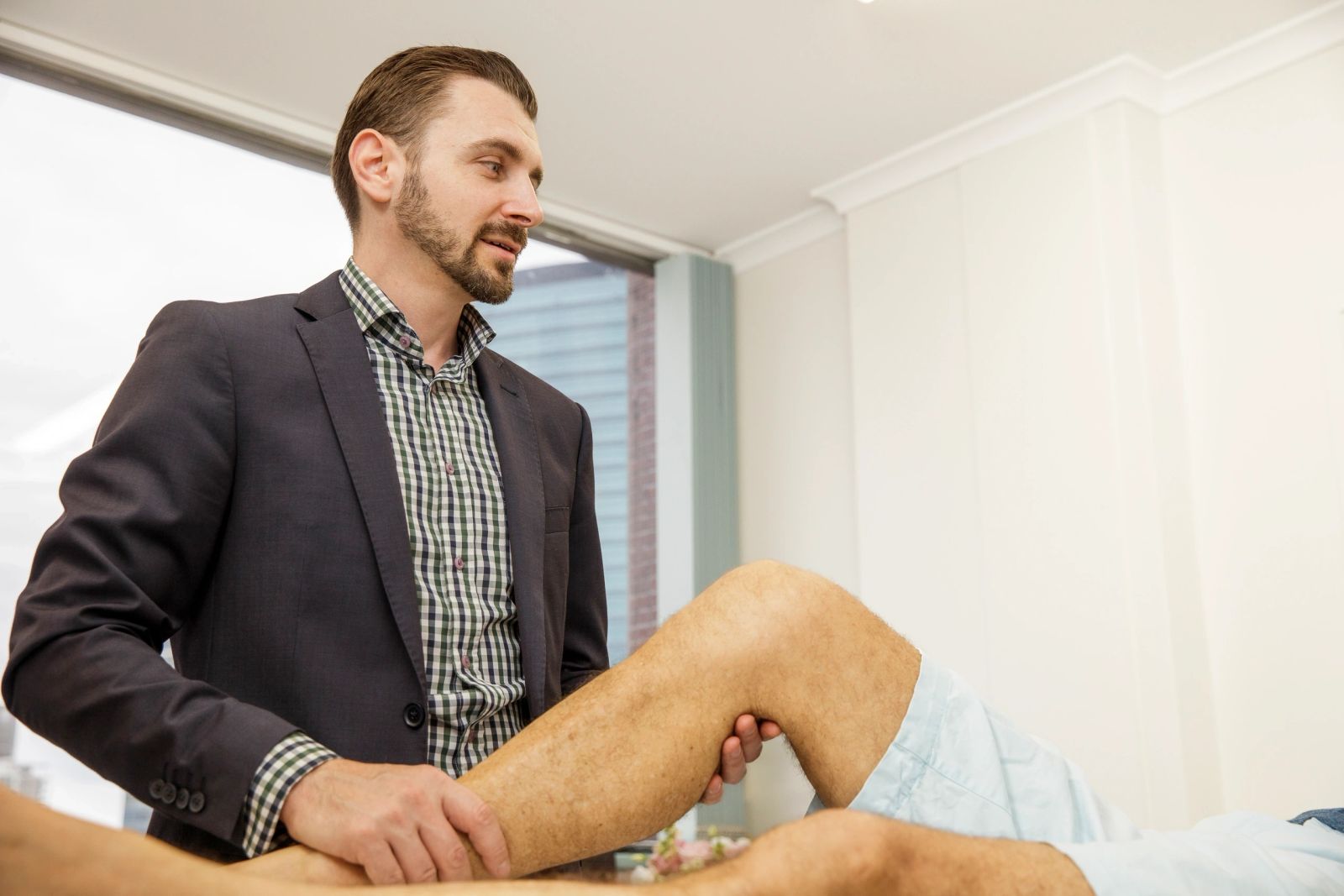
A thorough clinical examination by a specialist and modern imaging helps confirm the diagnosis. An international expert consensus recommends examination tests such as the dial test and the posterolateral drawer test, MRI, and varus stress X-rays (X-rays taken while the knee is gently pushed into a bow-legged position), with full-length leg X-rays from hip to ankle for longer-standing injuries (PMID 40414466). MRI is less accurate for the posterolateral corner than for the cruciate ligaments, so the examination is especially important (PMID 36625432).
What are the benefits of a posterolateral corner reconstruction?
Reconstruction restores stability to the outside of the knee. In laboratory testing, the LaPrade reconstruction restored resistance to bow-legged opening and to outward rotation to levels similar to those of the intact knee (PMID 15310564). In 64 people with a long-standing complete PLC injury, it improved knee stability, knee function scores and the single-leg hop test at an average of 4.3 years after surgery (PMID 20048091).
For complete tears, reconstruction has a lower failure rate than repair of the torn structures. In a review of 12 studies of recent complete PLC injuries, the operation failed in 7.1% of people after reconstruction, compared with 21.9% after repair, and all 22 people in the reconstruction group whose return to sport was reported got back to sport (PMID 37848567). A second review of 29 studies found failure rates of 0–15% after reconstruction, compared with 0–40% after repair (PMID 39672245).
Treating the posterolateral corner also helps protect a cruciate ligament reconstruction. In laboratory studies, an untreated PLC injury increased the force on an ACL graft (PMID 10424217), and reconstructing the posterolateral structures reduced the force on a PCL graft (PMID 17478278).
What are the risks of a posterolateral corner reconstruction?
Complications are not uncommon. A review of 60 studies (1,747 operations) found complications after surgery in about 20% of patients. The most common was stiffness of the knee (arthrofibrosis), and the infection rate was 1.3% (PMID 33502894). In the review of recent complete injuries, 8.7% of people needed a manipulation of the knee under anaesthetic to improve its movement (PMID 37848567).
The common peroneal nerve, which controls the muscles that lift the foot and toes, runs around the top of the fibula, close to where the graft is placed. Injury to this nerve from the surgery is rare, but it is a serious complication (PMID 33502894). Nerve damage caused by the original injury is more common, and when the nerve has been completely injured, it often does not recover (PMID 33074710).
The reconstruction can stretch or fail. Failure was reported in 9.4% of all operations in the review of 60 studies (PMID 33502894). In long-standing injuries, failure rates ranged from 4.3% to 24.2% with anatomical techniques, and up to 8% of people needed revision (repeat) surgery (PMID 38042407). Surgery does not always restore a normal knee: in the outcome study of 64 patients, the average knee score after surgery was 65.7 out of 100 (PMID 20048091). No single reconstruction technique has been shown to give the best results in every knee (PMID 40414466). Other risks are those of knee surgery in general, such as blood clots, ongoing pain or swelling, and a long period of rehabilitation.
Summary
A posterolateral corner reconstruction rebuilds the ligaments and tendons at the outer back part of the knee with tendon grafts, to restore stability against bow-legged opening and outward twisting. It is often done together with an ACL or PCL reconstruction. It is usually recommended when the expected benefits for you outweigh the risks. You should discuss your symptoms, your scans and your goals, including plans for sport and work, with your knee surgeon so that you can consider the options and the indications for surgery together.
General information only. The information on this page is general in nature and does not replace individual medical advice. All surgery carries risks, and results vary between patients. Please discuss your own circumstances with your treating practitioner.