
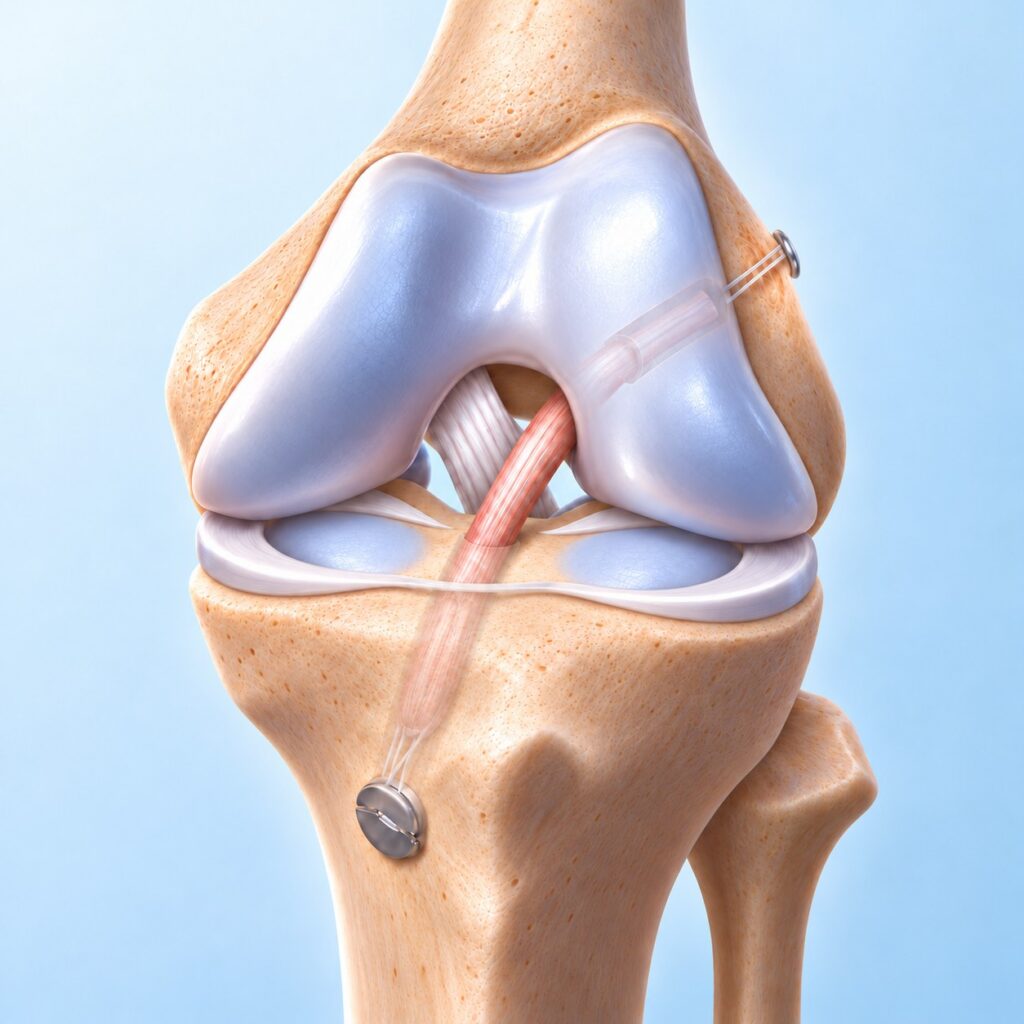
This page provides general information for patients of Dr Borshch, an orthopaedic surgeon consulting in Hamilton, Brisbane, who are being assessed for or considering ACL reconstruction surgery. If you have injured your knee playing sport and it now feels unstable, seeing a knee surgeon in Brisbane can clarify whether reconstruction or rehabilitation alone is the better path for you.
Your individual injury and treatment plan may be different, so this information should be used alongside advice from your surgeon and treating team.
What is ACL Reconstruction Surgery?
The anterior cruciate ligament (ACL) is one of the major stabilising ligaments inside the knee.
It connects the femur (thigh bone) to the tibia (shin bone) and helps control forward movement and rotation of the knee.
ACL injuries commonly occur during activities involving:
- sudden changes of direction
- pivoting
- landing from a jump
- rapid deceleration
- awkward twisting of the knee
- direct contact or collision
Some patients describe hearing or feeling a “pop”, followed by pain and rapid swelling. Others have relatively little pain once the initial injury settles but subsequently notice that the knee feels unstable or unexpectedly “gives way.”
An ACL tear does not automatically require surgery.
Some patients can return to their desired activities with structured rehabilitation alone.
When surgery is required, the usual operation is an ACL reconstruction. Rather than simply stitching the damaged ACL back together, a tendon graft is used to create a new ligament.
The aim is to restore knee stability and allow the patient to return to appropriate everyday, recreational and sporting activities.
Why is ACL Reconstruction Surgery Done?
The decision to undergo ACL reconstruction depends on considerably more than the appearance of the ACL on an MRI scan.
Surgery may be considered when there is:
- recurrent giving way or symptomatic instability
- a desire to return to sports or activities involving pivoting, cutting or rapid changes of direction
- instability affecting work or everyday activities
- associated meniscus or cartilage injury
- another ligament injury contributing to knee instability
- failure to achieve acceptable stability and function despite appropriate rehabilitation
Does every ACL tear need surgery?
No.
An important randomised controlled trial comparing early ACL reconstruction with structured rehabilitation and optional delayed reconstruction found that a strategy beginning with rehabilitation did not produce inferior patient-reported outcomes at two years compared with early reconstruction. Many patients allocated to rehabilitation did not subsequently require ACL reconstruction.
The five-year follow-up of the same randomised trial similarly found no significant difference in patient-reported outcomes between early reconstruction and initial rehabilitation with the option of later surgery.
However, these results do not mean that surgery is unnecessary for everyone.
Some patients continue to experience instability despite rehabilitation, while others have sporting, occupational or associated knee injuries that make reconstruction more appropriate.
Why does instability matter?
Repeated episodes of the knee giving way can interfere with sport, work and everyday activities.
There is also concern that recurrent instability can expose the meniscus and cartilage to additional injury.A systematic review examining recurrent instability after ACL injury found preliminary evidence that repeated instability episodes may be associated with increased odds of medial meniscus damage.
The objective of ACL reconstruction is therefore not simply to make an MRI look normal. It is to provide functional stability to a knee that requires it.
How is ACL Reconstruction Surgery Performed?
ACL reconstruction is usually performed using keyhole surgery (arthroscopy) together with small additional incisions.
Anaesthetic
The operation is usually performed under a general anaesthetic. Additional local anaesthetic or regional nerve blocks may be used to assist with pain relief.
Arthroscopy
A small camera is inserted into the knee.
This allows the joint to be carefully assessed, including:
- the ACL
- the menisci
- the cartilage surfaces
- other structures within the knee
Associated injuries can often be treated during the same operation.
Meniscus injuries
Meniscus tears frequently occur together with ACL injuries.
When a meniscus tear is suitable for repair, I generally prefer to preserve and repair the meniscus rather than remove it where reasonably possible.
Preserving meniscal tissue is important because the meniscus distributes load across the knee and contributes to joint stability.A systematic review of meniscal repair performed with ACL reconstruction found that healing varied with the location of the tear and was more likely in the outer vascular zone than in the adjacent zone. These results help inform assessment of tears that may be suitable for repair.
Choosing the ACL graft
The torn ACL is reconstructed using a graft.
Common graft options include:
- hamstring tendon
- quadriceps tendon
- patellar tendon
Each has potential advantages and disadvantages.
Patellar tendon grafts provide strong bone-to-bone fixation but can be associated with pain at the front of the knee or discomfort when kneeling.
Hamstring grafts avoid the patellar tendon but can affect hamstring strength and have their own graft-specific considerations.
Quadriceps tendon grafts provide another strong autograft option and are increasingly used in ACL reconstruction.
A large systematic review and meta-analysis comparing quadriceps tendon with hamstring and patellar tendon autografts found broadly comparable functional outcomes and graft survival, with differences in donor-site symptoms between graft types.
There is therefore no single graft that is ideal for every patient.
I consider age, sporting activity, occupation, kneeling requirements, previous surgery, associated injuries and individual anatomy when discussing graft choice.
Creating the new ACL
Small tunnels are created in the tibia and femur at the attachment sites of the ACL.
The graft is passed through these tunnels and secured using specialised fixation devices.
The position and tension of the graft are checked before completing the procedure.
Additional stabilisation procedures
Some patients have a greater degree of rotational instability or particular risk factors for recurrent ACL injury.
In selected patients, an additional procedure on the outside of the knee, such as a lateral extra-articular tenodesis (LET), may be performed together with ACL reconstruction.
This is not required for every ACL reconstruction.
The STABILITY randomised clinical trial involving young patients at increased risk of graft failure found that adding a lateral extra-articular tenodesis to hamstring ACL reconstruction significantly reduced graft rupture and persistent rotational instability.
The decision to add an extra-articular procedure is therefore based on the individual patient's instability pattern and risk factors, rather than being routinely required for every ACL reconstruction.
Closing the knee
Once the reconstruction and any associated procedures are complete, the wounds are closed and dressings are applied.
Preparing for ACL Reconstruction Surgery in Brisbane

ACL reconstruction is usually not an emergency operation.
This provides an opportunity to prepare the knee and the rest of the body before surgery.
Rehabilitation before surgery
I generally encourage patients to undergo pre-operative rehabilitation or “prehabilitation” before ACL reconstruction.
The goals include:
- reducing swelling
- regaining full knee extension
- restoring knee movement
- improving quadriceps strength
- improving walking
- preparing for postoperative rehabilitation
Operating on a very swollen and stiff knee can make postoperative rehabilitation more difficult.
A systematic review examining prehabilitation before ACL reconstruction found evidence that pre-operative rehabilitation can improve preoperative function and may contribute to improved postoperative outcomes.
Health preparation
Before surgery:
- stop smoking or vaping if possible
- maintain good nutrition
- maintain general fitness where possible
- tell us about medications and supplements
- tell us about previous blood clots or anaesthetic problems
- optimise other medical conditions
- arrange physiotherapy for postoperative rehabilitation
Preparing your home
Arrange transport and some assistance during the first few days after surgery.
Remove obvious trip hazards and make sure commonly used items are easy to access.
Because Brisbane has a warm and humid climate, particularly during summer, consider making sure you have access to a cool, comfortable and preferably air-conditioned environment during early recovery. Apart from making recovery more comfortable, a large meta-analysis found an association between warmer weather and higher rates of surgical-site infection. Keeping yourself comfortable and your surgical dressings clean and dry is therefore particularly important during Brisbane's warmer months.
What to Expect After ACL Reconstruction

Rehabilitation is a major part of ACL reconstruction.
The operation creates the new ligament, but strength, movement, balance, confidence and sporting function need to be rebuilt progressively over the following months.
First 2 weeks
Early priorities generally include:
- controlling pain and swelling
- regaining full knee extension
- progressively improving knee flexion
- activating the quadriceps
- walking safely
- protecting any associated meniscus or cartilage procedure
Crutches are commonly used initially.
Weight-bearing instructions may be modified if a meniscus repair, cartilage procedure or other additional surgery has been performed.
2–6 weeks
Rehabilitation progressively focuses on:
- normalising walking
- restoring knee movement
- improving quadriceps and hamstring strength
- reducing swelling
- balance and movement control
Many patients are walking comfortably without crutches during this period, although recovery varies.
6 weeks–3 months
Strengthening becomes increasingly important.
Rehabilitation progresses according to function rather than simply the number of weeks since surgery.
Exercises may include:
- progressive resistance training
- single-leg control
- balance and proprioception
- cardiovascular conditioning
- increasingly complex movement patterns
3–6 months
Running and more demanding exercises may gradually be introduced when appropriate strength, movement and control have been achieved.
The knee should not progress simply because a particular date has been reached.
6–12 months and return to sport
Returning to pivoting sport is one of the most important stages of ACL rehabilitation.
Return should consider:
- time since surgery
- quadriceps and hamstring strength
- hopping and functional testing
- movement quality
- absence of significant swelling
- knee stability
- psychological readiness
- the demands of the particular sport
A prospective cohort study of young athletes following ACL reconstruction found that athletes who returned to high-level knee-demanding sport before nine months had a substantially higher rate of a second ACL injury.
For this reason, return to sport should generally be criteria-based as well as time-based, rather than determined by the calendar alone.
Long-Term Outcomes After ACL Reconstruction
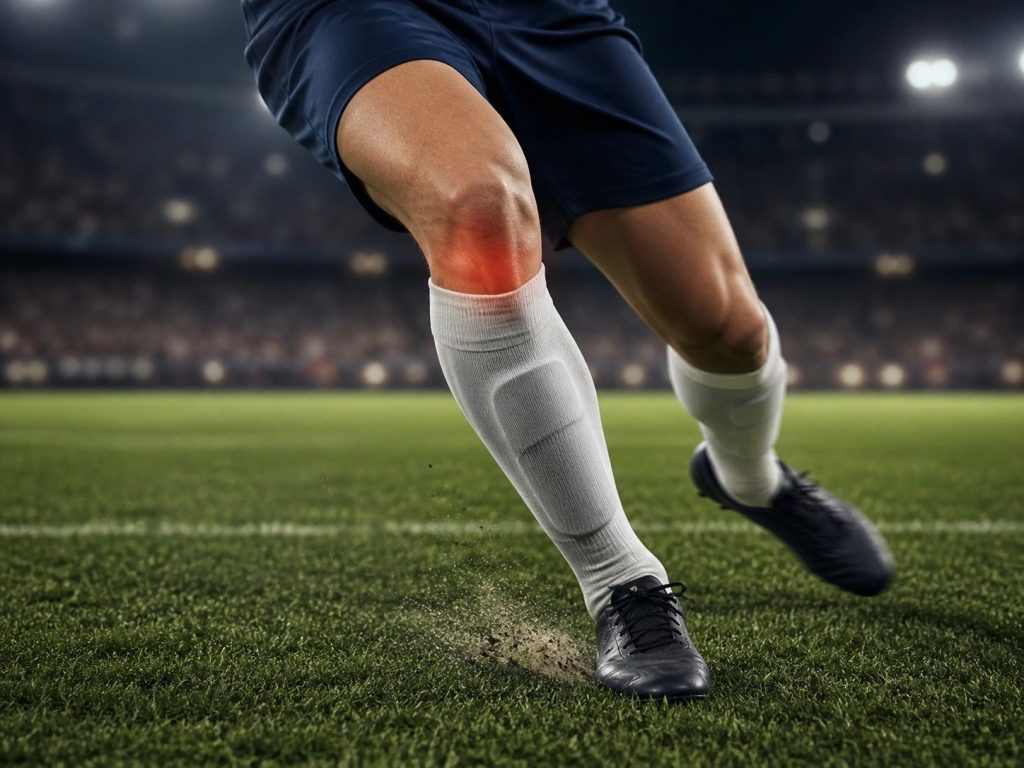
Knee stability and function
ACL reconstruction can restore stability and allow many patients to return to demanding activities.
However, an ACL-reconstructed knee is not necessarily identical to a knee that has never been injured.
Outcome depends on:
- the original injury
- meniscus and cartilage damage
- graft choice
- surgical reconstruction
- rehabilitation
- strength and movement control
- return-to-sport decisions
- subsequent injuries
Return to sport
Returning to sport does not necessarily mean returning to exactly the same level of competition.
A major systematic review and meta-analysis of return to sport following ACL reconstruction found that approximately 81% of patients returned to some form of sport, approximately 65% returned to their pre-injury level, and approximately 55% returned to competitive sport.
These figures describe large groups of patients and cannot predict the outcome for an individual patient.
Risk of another ACL injury
A reconstructed ACL can tear again.
The ACL in the opposite knee can also subsequently be injured.
This is particularly relevant in young patients returning to pivoting sports.
A systematic review and meta-analysis examining secondary ACL injury in younger athletes found a substantial risk of either graft rupture or ACL injury to the opposite knee after return to sport.
Appropriate rehabilitation, strength, movement control and sensible return-to-sport progression are therefore important even after the reconstructed knee feels good.
Does ACL reconstruction prevent arthritis?
This is an important question.
An ACL injury is a significant injury to the knee and is often accompanied by damage to the meniscus, cartilage or other structures.
Patients who sustain an ACL injury have an increased long-term risk of developing post-traumatic osteoarthritis.
However, ACL reconstruction should not be presented as an operation that has been proven to prevent arthritis.
A meta-analysis comparing ACL reconstruction with non-operative treatment at long-term follow-up found no evidence that ACL reconstruction clearly prevents the development of knee osteoarthritis, although reconstruction was associated with better objective knee stability and fewer subsequent meniscectomies.
The primary purpose of ACL reconstruction is therefore to restore functional knee stability, not to guarantee prevention of arthritis later in life.
Things to Look Out for After ACL Reconstruction
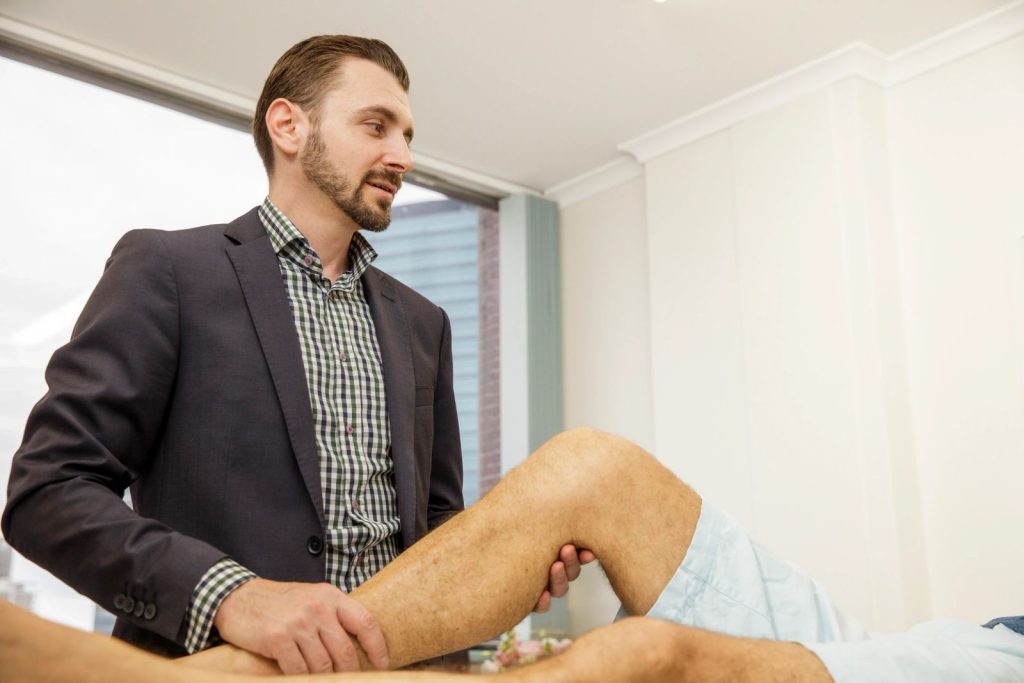
Contact our office, your GP, physiotherapist, or seek urgent medical attention if you develop:
Possible infection
- increasing redness or warmth around the wounds
- increasing pain after initially improving
- persistent wound leakage
- pus or unusual discharge
- fever, chills or feeling significantly unwell
Possible blood clot
Seek medical attention for:
- new calf pain or tenderness
- significant one-sided leg swelling
- sudden shortness of breath
- chest pain or coughing blood
Sudden breathing symptoms require emergency assessment.
Increasing stiffness
Regaining full knee extension is particularly important after ACL reconstruction.
If the knee is becoming increasingly stiff or you are struggling to regain extension despite rehabilitation, this should be assessed.
Persistent swelling
Some swelling is expected during recovery.
Repeated significant swelling after exercise may indicate that rehabilitation is progressing faster than the knee can currently tolerate.
Giving way or another injury
A significant new twisting injury, sudden giving way, new large swelling or a new “pop” should be assessed.
Difficulty progressing rehabilitation
Recovery does not occur at exactly the same speed for every patient.
However, persistent pain, weakness, swelling or difficulty progressing through rehabilitation should be discussed with your treating team.
Procedures explained
ACL Reconstruction Surgery

Dr Alexey Borshch is a specialist orthopaedic surgeon in Brisbane with a particular clinical focus on surgery of the knee, hip, ankle and lower limb.
His practice as a Brisbane knee surgeon includes the assessment and treatment of ACL injuries, meniscus tears, cartilage injuries, patellar instability and other sporting and traumatic conditions of the knee.
Not every ACL tear requires reconstruction. Assessment includes the patient's symptoms, knee stability, sporting and occupational requirements, associated meniscus or cartilage injuries and response to rehabilitation.
When ACL reconstruction is appropriate, graft selection and any additional procedures are tailored to the individual knee rather than using the same reconstruction for every patient.
Dr. Borshch completed his medical degree at the University of Queensland before undertaking specialist orthopaedic training in Queensland. He completed the Australian Orthopaedic Association training program and the Royal Australasian College of Surgeons Fellowship Examination in Orthopaedic Surgery. He obtained specialist registration in Orthopaedic Surgery in 2022 and is a Fellow of the Australian Orthopaedic Association.
He offers consultations in Hamilton, Brisbane, and conducts private orthopaedic surgery at Brisbane Private Hospital.