

What is a meniscal root repair?
Each knee has two menisci, rubbery C-shaped cushions between the thigh bone and the shin bone. Each meniscus is anchored to the shin bone at its front and back ends by a strong attachment called the root. The root holds the meniscus in place so that it can spread load across the joint. A root tear either pulls the root off the bone or splits the meniscus right next to it. When this happens, the meniscus can be pushed out of the joint (called extrusion) and it stops working as a cushion (PMID 24623276). In a laboratory study, a tear of the back root of the medial meniscus (on the inner side of the knee) increased the peak pressure on the joint surface by 25%, to a level similar to having the whole meniscus removed (PMID 18762653).
Tears of the back root of the medial meniscus are most often seen in middle-aged and older people and usually develop through wear, while tears of the lateral root (on the outer side of the knee) are more common in younger, active people with an ACL injury (PMID 42600745). Without treatment, a medial root tear often leads to worsening knee arthritis: in one study of people treated without surgery, 31% had a knee replacement within about five years (PMID 27761625). A thorough clinical examination by a specialist and modern imaging (MRI scans) helps confirm the diagnosis, and knee arthroscopy confirms the tear at the time of surgery. Dr Alexey Borshch assesses and treats meniscus tears, including root tears, in Brisbane, consulting in Hamilton and operating at Brisbane Private Hospital.
Meniscal root repair is a minimally invasive, arthroscopic (keyhole) operation that reattaches the root to its normal position on the shin bone. In the most common method, the surgeon passes strong sutures through the torn root, pulls them down through a small tunnel drilled in the shin bone and secures them on the front of the shin bone (a transtibial pull-out repair). Less often, the root is fixed with an anchor inside the joint (an all-inside repair) (PMID 42809375; PMID 42600745).
What are the benefits of a meniscal root repair?
Repairing the root restores the meniscus as a working cushion. In the laboratory study above, repair brought the pressure on the joint surface back to normal and corrected the abnormal movement of the knee caused by the tear (PMID 18762653).
Repair gives better long-term results than removing the torn part of the meniscus (partial meniscectomy). In a study with at least 10 years of follow-up, 79.6% of repaired knees had not failed, compared with 44.4% after partial meniscectomy, and knee function scores were better after repair (PMID 32437216). A 2026 review of studies with at least five years of follow-up found less arthritis on X-rays after repair and fewer conversions to knee replacement: 3.5% after repair compared with 20.5% after partial meniscectomy (PMID 42311344).
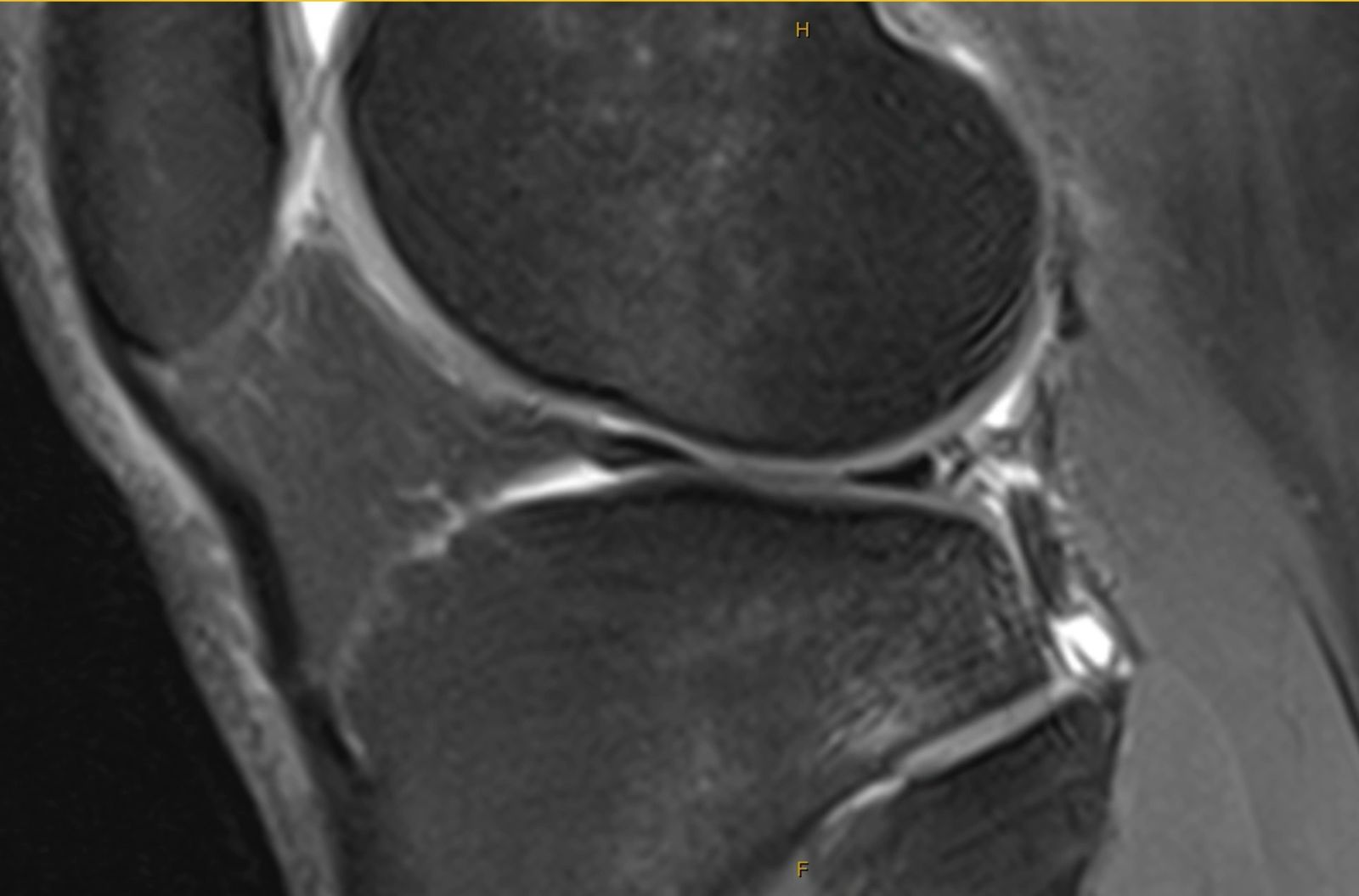
An analysis comparing repair, meniscectomy and non-surgical care found that repair led to less osteoarthritis and was the most cost-effective approach over time (PMID 29517925). Repair performed within the first three months after the tear gave greater improvement in symptoms than delayed repair (PMID 41923442).
What are the risks of a meniscal root repair?
Root repair does not suit every knee. Results are poorer when there is already advanced wear of the joint cartilage, or when the leg is bow-legged (varus) by more than 5° (PMID 30772183). In one study, the repair had failed on MRI in 88.5% of knees with 5° or more of varus, compared with 24.4% of knees with normal alignment, and 15.6% compared with 2.4% went on to a knee replacement (PMID 42099183). In some bow-legged knees the repair may be combined with a high tibial osteotomy to straighten the leg; this may improve healing of the repair, but arthritis can still progress (PMID 42335327).
The repair does not always heal or put the meniscus fully back in place. Across studies of the pull-out method, complete healing ranged from 21.5% to 85.7%, and neither common method reliably corrects extrusion (PMID 42809375). Arthritis can still progress after repair: in a study of isolated repairs followed for at least five years, 13.9% of patients went on to a knee replacement (PMID 41244229).
Recovery takes longer than after removing torn meniscus, because the repair needs to be protected while it heals. This usually means a period of limited weight-bearing and limited bending of the knee, sometimes in a brace, and rehabilitation protocols vary between surgeons (PMID 42299826). Other risks are the same as for other arthroscopic knee operations, such as infection, blood clots, stiffness and numbness near the incisions; these are described on the knee arthroscopy page. There are also risks from the anaesthetic, which your anaesthetist will discuss with you.
Summary
Meniscal root repair aims to restore the cushioning function of the meniscus and to slow the development of arthritis. It is usually recommended when the expected benefits outweigh the risks for that person, most often when the joint cartilage is still in good condition and the leg alignment is close to normal. Please discuss your symptoms, your goals (for example, plans for sport or work) and your MRI findings with your knee surgeon so that the options and indications are considered together.
General information only. The information on this page is general in nature and does not replace individual medical advice. All surgery carries risks, and results vary between patients. Please discuss your own circumstances with your treating practitioner.