

Hip pain does not always appear directly over the hip joint. It may be felt in the groin, outside of the hip, buttock, thigh or even the knee. The location provides useful clues, but it cannot confirm a diagnosis by itself.
Different conditions can produce similar symptoms, and more than one problem may be present. Age, activity and how the pain behaves are also important. Assessment combines these details with examination and, when necessary, imaging.
For someone in Brisbane seeking help, the appropriate first appointment may be with a GP, physiotherapist, sport and exercise physician or orthopaedic surgeon.
Pain at the front of the hip or in the groin
Deep groin pain often raises suspicion that symptoms are coming from inside the hip joint. Common possibilities include osteoarthritis, femoroacetabular impingement (the hip bone rubbing on the pelvis bone), injury to the labrum around the socket, or irritation of the joint lining.
Hip osteoarthritis commonly causes gradually developing pain and stiffness. Getting out of a low chair, putting on shoes, walking or turning may become difficult. Morning stiffness may ease with movement.
Pain from osteoarthritis is not confined to the groin. In one study of people with confirmed hip osteoarthritis, 53% marked the groin, but pain was also reported over the outer hip, thigh, buttock, knee and lower leg (PubMed study of hip pain distribution). This is one reason symptoms should not be diagnosed from a pain map alone.
In younger or active adults, groin pain during deep bending, twisting, sitting or sport can occur with femoroacetabular impingement—contact between the ball and socket rim related to their shape. It may accompany labral damage on MRI, but similar scan changes can also occur without symptoms. Diagnosis requires the clinical and imaging findings to agree. Persistent groin pain is the most frequent initial symptom in a PubMed review of hip impingement.
Front-crease pain can also arise from hip-flexor muscles and tendons after sprinting, kicking or a training change. Hernias and abdominal, pelvic or urinary conditions can be felt here, so not all groin pain is orthopaedic.
Pain on the outside of the hip
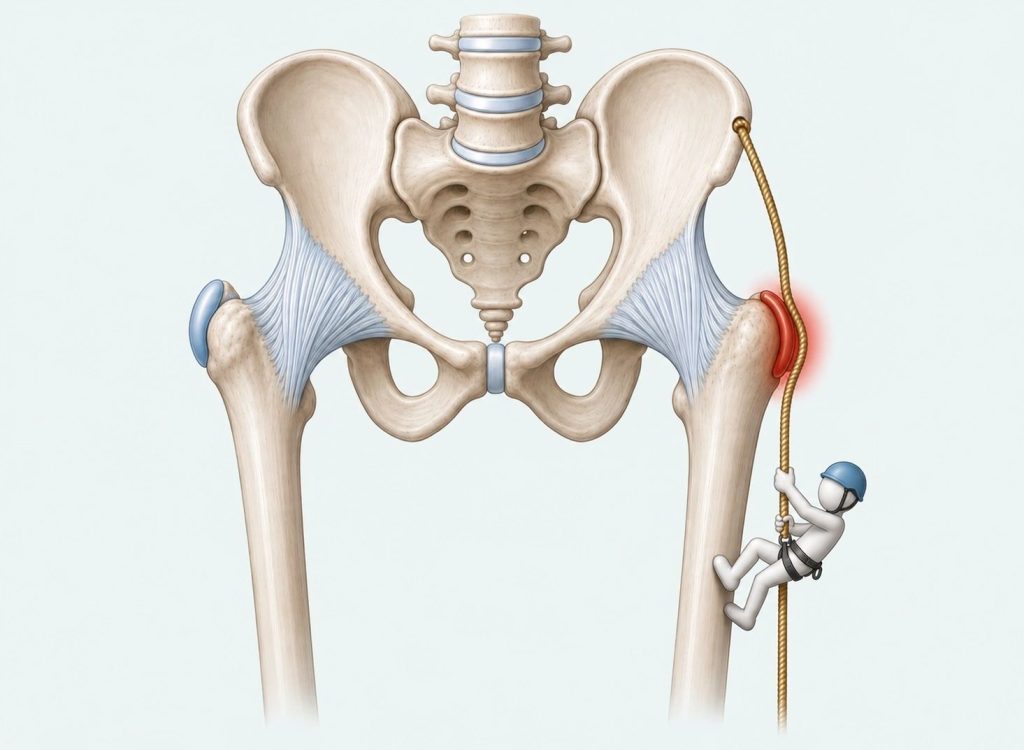
Pain over the bony point on the side of the hip is often called greater trochanteric pain syndrome. It commonly involves the gluteal tendons, which connect the buttock muscles to the upper thigh bone. A nearby fluid-filled sac called a bursa may also be irritated, but “bursitis” does not explain every case.
Typical symptoms include tenderness when pressing the side of the hip, pain when lying on that side, discomfort climbing stairs and aching during longer walks. The pain may travel down the outside of the thigh but usually does not extend below the knee.
Clinical examination can be informative. A systematic review found that combining tenderness over the gluteal tendons with pain during resisted movement could substantially change the likelihood of greater trochanteric pain syndrome (PubMed diagnostic review). Imaging is not always required at the first visit.
Treatment is usually non-operative and may include adjusting aggravating activities and gradual strengthening. Advice should be tailored because stretching into painful positions may increase tendon compression.
Pain in the buttock or back of the hip
Pain behind the hip has a wider range of possible sources. The lower back can refer pain into the buttock, sometimes with tingling, numbness or discomfort travelling down the leg. The sacroiliac region, deep buttock muscles and the upper hamstring tendon may also contribute.
Proximal hamstring tendinopathy usually causes pain close to the “sitting bone.” It may be worse during running, lunging or prolonged sitting. A sudden injury while sprinting or slipping can instead cause an acute hamstring tear.
Buttock pain can occasionally arise from the hip joint itself. In the osteoarthritis study mentioned above, 38% of participants marked the buttock region. Examination of both the hip and lower back is therefore often necessary before deciding where symptoms originate.
Pain in the thigh or knee
Hip problems may produce referred pain down the front or side of the thigh. Some patients notice knee pain more than hip pain, particularly when arthritis is present. In the study of hip osteoarthritis, 17% reported pain around the knee, although none had pain exclusively in the knee or lower leg.
This does not mean that most knee pain comes from the hip. Knee arthritis, tendon problems and injuries remain common. However, when knee examination and imaging do not explain the symptoms—or when hip movement is restricted—the hip should also be assessed. In children and adolescents, unexplained thigh or knee pain with a limp deserves prompt medical review because some important childhood hip conditions present this way.
When hip pain needs urgent assessment
Seek prompt medical care after a fall or injury if you cannot bear weight, the leg looks shortened or turned, or pain is severe. A fracture can occasionally occur without dramatic deformity, particularly in older adults or people with reduced bone strength.
A hot, swollen joint with fever or feeling generally unwell may indicate infection. Sudden severe pain without injury, rapidly worsening symptoms, unexplained weight loss, night sweats, new leg weakness, numbness around the groin, or loss of bladder or bowel control also require urgent assessment.
Turning pain location into a diagnosis
The clinician should ask how symptoms began, examine the hip and nearby areas, and decide whether tests would change treatment. X-rays can help when arthritis or bone injury is suspected. MRI, ultrasound, CT and blood tests have specific roles but are not always required.
If you are choosing a Brisbane healthcare provider, look for appropriate registration and experience with the type of problem being assessed. A reputable clinic should explain uncertainty, non-operative options and when referral may be appropriate. No practitioner can determine the cause solely from where a patient points or guarantee a particular result.
Pain location is a helpful starting clue: groin pain may suggest the joint, outer pain often involves the gluteal tendons, buttock pain may arise from the back or hamstring, and hip disease can refer discomfort into the thigh or knee. The final diagnosis comes from fitting the whole story together.
This article provides general information only and should not be considered individual medical advice. Treatment decisions should be made following a thorough assessment and discussion with your treating orthopaedic surgeon. It is not possible to determine the most appropriate procedure without considering your individual symptoms, examination findings and imaging.


