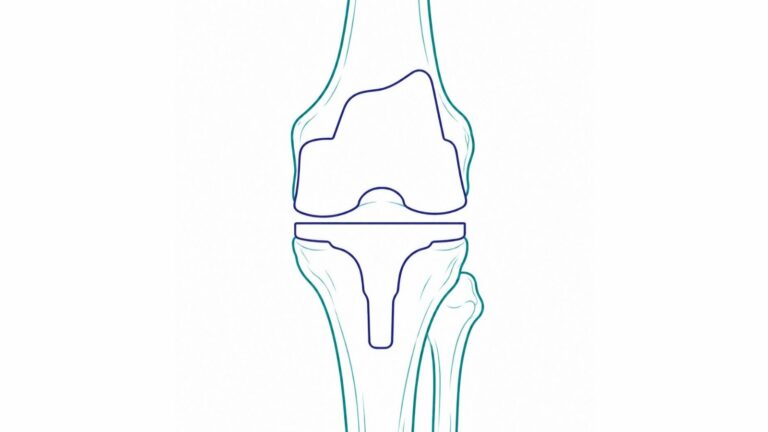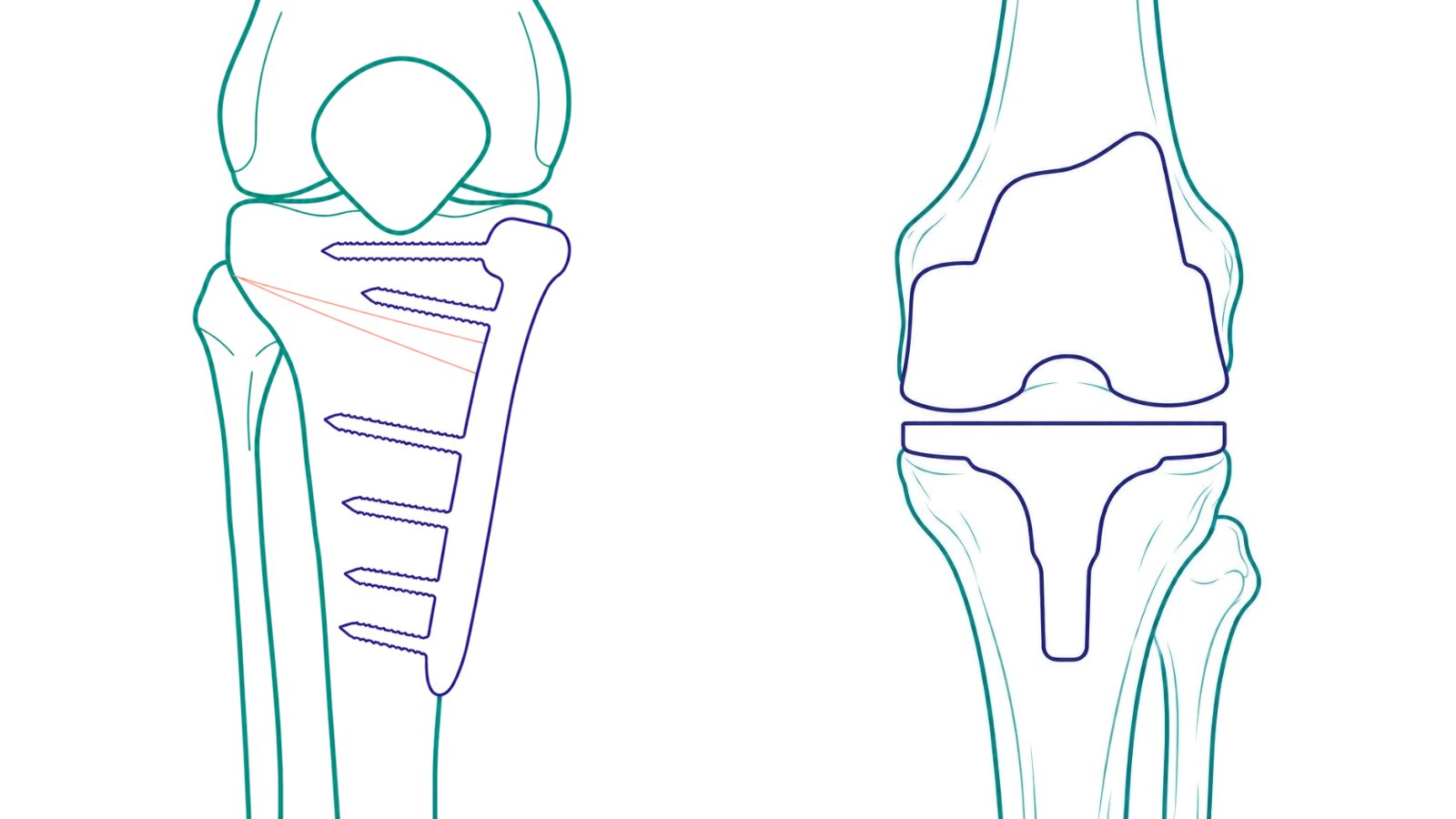
There is no set minimum age for a knee replacement. Age matters mainly because a younger person has more years ahead in which the implant may need to be redone, and research shows the lifetime chance of a revision is higher for people who have surgery in their 50s than in their 70s. The decision rests on how much the arthritis affects your life, what your examination and X-rays show, and whether other treatments have helped.
“Am I too young?” is one of the most common questions I am asked by patients in their 40s and 50s with knee arthritis. Many have been told to put up with the pain until they are older.
Age is part of the conversation, but it is rarely the whole answer. When I see a younger patient with knee arthritis, I want to understand how the knee is affecting their life, the pattern of the arthritis, and what has already been tried.
Is there a minimum age for a knee replacement?
No. There is no age below which a total knee replacement is ruled out, and no age at which it becomes automatic. Most people having a knee replacement in Australia are older: in a national registry study of patient-reported outcomes, the average age of people having a total knee replacement was 67.5 years (PMID 34182793).
People who need a knee replacement much earlier often have a particular reason. A 2025 systematic review of 15 studies, covering 17,705 patients under 50 (average age 41), found that osteoarthritis was still the most common reason for surgery, but this group often had other factors such as inflammatory arthritis, previous knee surgery or steroid use (PMID 40840656).
So the more useful question is usually not “How old am I?” but “How severe is the arthritis, and how much is it limiting me?”
Will a knee replacement wear out sooner if I am younger?
Most knee replacements last a long time, but younger patients have a higher lifetime chance of needing a revision (a second operation to replace some or all of the implant).
The clearest figures come from a UK population study of 54,276 total knee replacements followed for up to 20 years. Overall, 96.1% of knees had not been revised at 10 years and 89.7% at 20 years.
For people over 70, the lifetime risk of revision of a hip or knee replacement was about 5%. That risk rose steadily in younger age groups, reaching about 35% for men in their early 50s, with lower figures for women of the same age (PMID 28209371).
A combined analysis of more than one million knee replacements for osteoarthritis from the Australian, Swedish and Kaiser Permanente (US) registries also found that implant survival favoured patients aged 65 and over (PMID 35113168).
Even in people under 50, results are reasonable. In the review mentioned above, implant survival was 97% in studies with less than five years of follow-up, 95% at five to 10 years, and 87% beyond 10 years (PMID 40840656). None of those studies were randomised, so the figures carry some uncertainty.
Part of the difference is simple arithmetic: a 50-year-old has more years in which something can go wrong. Higher activity is often suggested as another reason, but that remains a theory. In the UK study, revisions in people operated on under 60 happened at a median of 4.4 years, which suggests early problems contribute as well as gradual wear, although the study did not prove this.
Do younger people do as well after a knee replacement?
Most people do well. In Australia’s national registry outcomes program, 81.6% of people said their knee was “much better” six months after a total knee replacement, 80.8% were satisfied or very satisfied, and 10.5% were dissatisfied (PMID 34182793). Those figures cover all ages.
Whether age itself changes satisfaction is contested. In a German prospective study of 236 patients, those dissatisfied at one year were younger on average, and patients under about 63 were three times more likely to be dissatisfied (PMID 38796721). However, in a much larger US multicentre cohort of 9,057 patients, people under 65 were slightly less likely to be dissatisfied than older patients (PMID 37001625).
One suggested explanation is expectations: younger people often hope to return to running or high-impact sport, and a replacement knee is not a young, healthy knee.
A meta-analysis of 44 studies helps set realistic goals. Overall, 82% of people returned to sport after a total knee replacement: 76% for low-intensity activities, but only 35% for high-intensity sports. Return to work was 65% overall, reaching about 90% at one year in the studies that measured it then (PMID 37499045). These studies were mainly observational, so the figures are a guide rather than a promise.
Is it better to wait?
Waiting is reasonable while the knee is manageable, and structured non-surgical treatment helps many people.
The best evidence comes from a Danish randomised trial of 100 people with moderate to severe knee osteoarthritis who were eligible for a knee replacement. One group had a knee replacement plus a 12-week program of exercise, education, dietary advice, insoles and pain medication; the other had the program alone.
At one year, the knee replacement group had improved about twice as much (32.5 versus 16.0 points on a 100-point knee score), but also had more serious adverse events (24 versus 6). Only 26% of the non-surgical group had gone on to a knee replacement within a year (PMID 26488691).
At two years, 32% of the non-surgical group had had surgery, so two in three had delayed it for at least two years (PMID 29723634). The average age in these trials was about 66, so the results may not apply directly to younger people. Still, the message is useful: a good non-surgical program is worth doing properly, and a knee replacement offers more relief when that is no longer enough.
Waiting also has costs. Years of poor sleep, reduced activity and time off work matter, particularly in midlife, and reaching a certain birthday is rarely a good reason on its own.
What are the options before a total knee replacement?
The right option depends on where the arthritis is, how the leg is aligned, and how severe the damage is.
- Non-surgical treatment: exercise-based physiotherapy, education and pain relief. This is the starting point for almost everyone.
- High tibial osteotomy: for arthritis mainly on the inner side of a bow-legged knee, a high tibial osteotomy realigns the shin bone to shift load to the healthier side, keeping your own joint.
- Partial knee replacement: when arthritis is limited to one compartment, a partial knee replacement resurfaces only the worn part.
- Total knee replacement: when arthritis affects more of the joint, or other options have not helped.
An osteotomy can buy time. A systematic review of 59 studies with 5,162 patients found that 4.5% had been converted to a knee replacement within five years, 8.3% at five to 10 years, and 11.2% beyond 10 years. The overall complication rate was 12.1% (PMID 39916951). Most of the studies were observational, and results depend on careful patient selection.
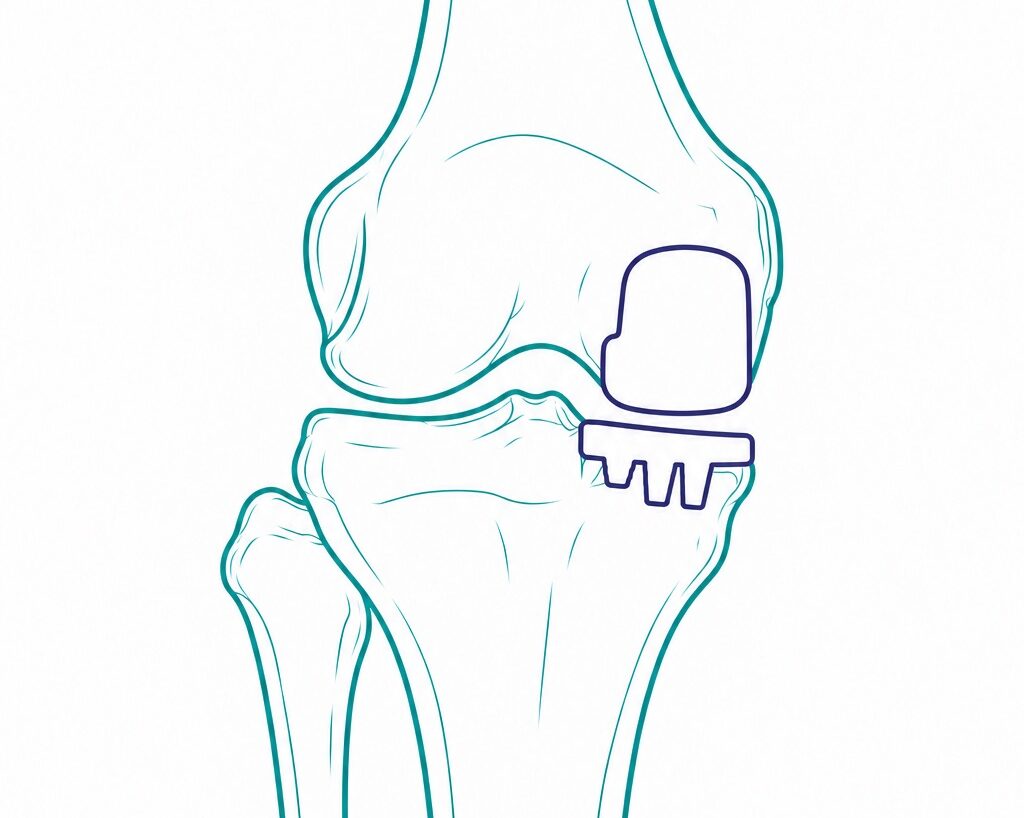
The UK TOPKAT trial randomly allocated 528 people (average age 65) with arthritis on the inner side of the knee to a partial or total replacement. At 10 years, knee scores were similar, revision rates were 5% in each group, complications were 21% after partial and 29% after total replacement, and the partial replacement was more cost-effective (PMID 41270774). You can read more in full knee replacement vs partial.
What should guide the decision?
For a younger person, the questions that matter most are usually these:
- How much is the knee affecting sleep, work and the activities you value?
- Do the X-rays and examination show knee arthritis severe enough to explain the symptoms?
- Is the arthritis in one part of the knee or throughout, and how is the leg aligned?
- What non-surgical treatment has been tried, and for how long?
- What do you hope to be doing in five and 10 years?
If the answers point towards surgery, age becomes part of the discussion about which operation and what to expect, rather than a reason on its own to say no. A minority of people also have some pain after a well-performed replacement, as discussed in can a good knee replacement still hurt?
The bottom line
You are not automatically too young for a knee replacement. Younger patients have a higher lifetime chance of revision and often higher activity goals, so the decision deserves a careful conversation.
For many people in their 40s and 50s, a structured non-surgical program, an osteotomy or a partial knee replacement are worth considering first. When arthritis is severe and other treatments have not helped, a total knee replacement can still be the right choice, whatever your age.
If you would like your knee assessed, you can read more about seeing a knee surgeon in Brisbane or about Dr Alexey Borshch, orthopaedic surgeon.
This article provides general information only and should not be considered individual medical advice. Treatment decisions should be made following a thorough assessment and discussion with your treating orthopaedic surgeon. It is not possible to determine the most appropriate procedure without considering your individual symptoms, examination findings and imaging.