Numbness after total knee replacement is common, usually affects skin beside the scar, and may influence comfort or kneeling during recovery. Understanding why it occurs, how incision position may affect it, and what happens over time can make recovery less surprising.
Numbness is something I routinely discuss with patients before a total knee replacement. It is easy to focus on the bigger issues—pain relief, walking, rehabilitation and implant longevity—so this smaller detail is sometimes forgotten by the time surgery arrives. Afterwards, patients can therefore be surprised to discover a patch of skin beside the scar that feels numb, tingly or simply “different”.
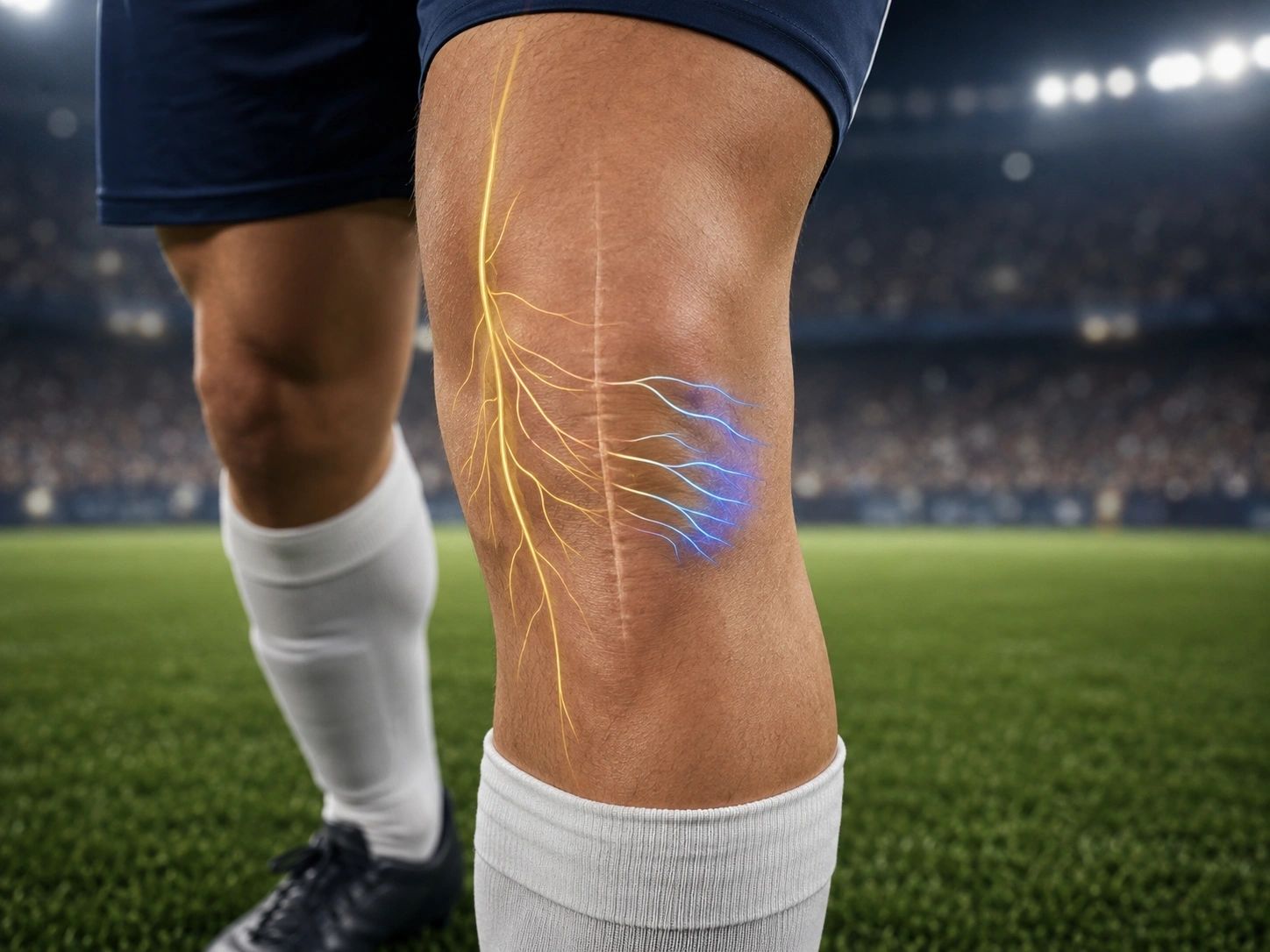
For most people this is not a sign that something has gone wrong. It occurs because small sensory nerves cross the front of the knee and may be divided when the surgical incision is made.
Why does knee replacement cause numbness?
The main nerve involved is usually the infrapatellar branch of the saphenous nerve. This is a small sensory nerve that supplies feeling to the skin around the front and outer side of the knee.
Its course varies considerably between people, and branches often cross the area where a knee replacement incision needs to be made. As a result, complete preservation of every branch is difficult.
A study specifically examining patients after total knee replacement found postoperative numbness to be common and highlighted the importance of discussing it during consent before surgery. PubMed: Postoperative numbness of the knee following total knee arthroplasty
Importantly, these nerves provide skin sensation. They do not power the quadriceps or control movement of the knee, so the typical numb patch beside the scar does not mean that the knee replacement itself is weak or unstable.
Does the position of the incision matter?
There is more than one way to position the skin incision for a full knee replacement.
A midline incision running down the front of the knee is probably the most familiar. Some surgeons place the incision slightly medial, while others use a more lateral or gently curved lateralised incision, particularly around the lower part of the knee.
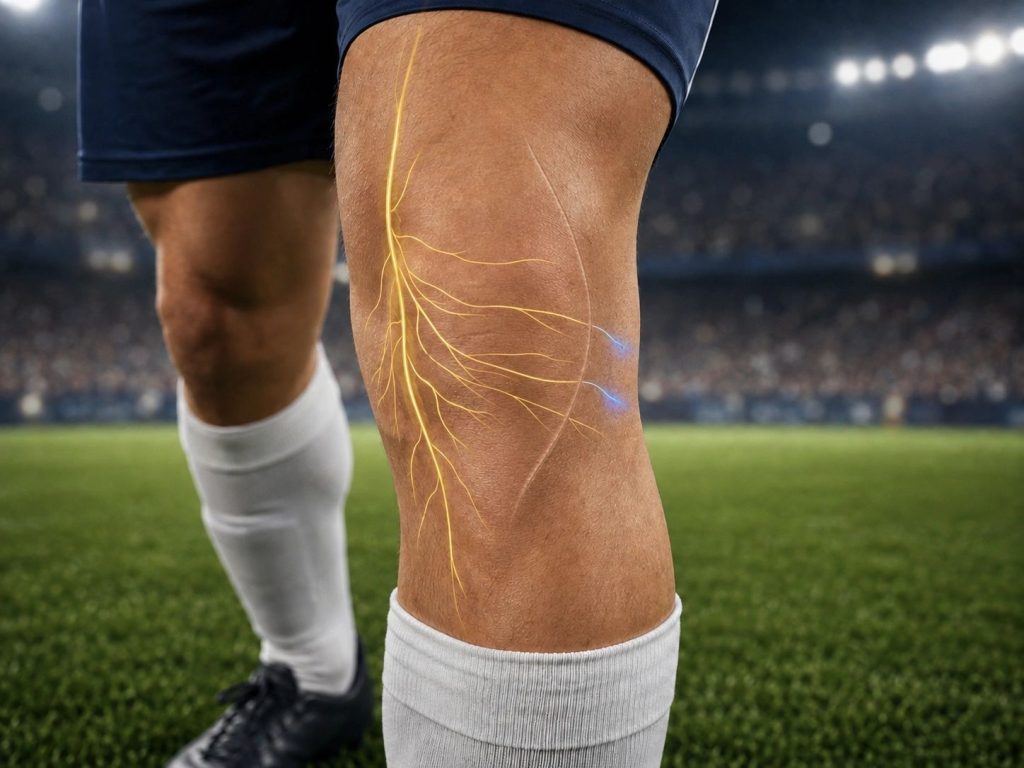
The reason incision position may matter is anatomical. The small sensory nerves generally travel from the inner side of the knee towards the outer side. Moving or curving the incision can therefore alter which branches are crossed.
Research has produced interesting, although not completely uniform, results.
In a randomized controlled trial of 162 knees, patients receiving an anterolateral incision had a substantially smaller area of numbness at one year than those receiving an anteromedial incision—approximately 3 cm² compared with 10.6 cm². In the same trial, around 81% of the lateral-incision group could kneel compared with approximately 60% in the medial-incision group. PubMed: randomized trial of anterolateral versus anteromedial incisions
A more recent randomized study comparing a lateralised incision with a standard midline incision found persistent numbness at one year in 25% versus 53% of knees respectively, with a smaller area of numbness in the lateral group. Kneeling was also slightly better at some follow-up points. PubMed: lateral versus midline incision randomized study.
However, not every study has found this advantage. A bilateral randomized trial published more recently found no significant difference in sensory loss, kneeling ability or patient-reported outcomes between lateral and midline incisions at 12 months. PubMed: lateral versus midline bilateral randomized trial
So, incision placement may influence numbness, but it is only one factor and there is not yet evidence that one incision is best for every patient.
Does the numbness improve?
Usually it does.
The numb area is often largest in the early months after surgery and gradually becomes smaller. Nearby sensory nerves can extend into the affected area, while the brain also becomes less conscious of the altered sensation.
A randomized study comparing standard midline, shorter and lateral-exit incisions found that numbness generally reduced substantially during the first year. By 12 months, most patients had recovered much of the lost sensation and functional outcomes were similar between incision groups. PubMed: incision position, length and numbness after knee replacement
Some patients nevertheless retain a small permanent numb patch. In many cases they eventually notice it only when deliberately touching that part of the knee.
What about pain?
Numbness and pain are not necessarily the same thing.
Most sensory change after total knee replacement is simply reduced feeling rather than painful nerve damage. A study examining numbness one year after knee replacement found that 68% of patients reported some numbness, but the degree of numbness was not significantly associated with worse WOMAC or KOOS outcome scores. PubMed: effect of numbness on outcomes after total knee replacement.
Occasionally, however, a small nerve ending can become sensitive and produce burning, tingling or electric-shock sensations. Persistent or severe nerve-type pain is less typical than simple numbness and deserves assessment if it becomes troublesome.
Will I be able to kneel?
This is another subject I discuss before surgery.
Many patients worry that kneeling might damage their knee replacement. In general, once the wound is healed and recovery has progressed appropriately, there is no evidence that ordinary kneeling mechanically damages a well-fixed knee replacement.
That does not mean everyone finds kneeling comfortable.
A review of the evidence found that 60–80% of patients report at least some difficulty kneeling after total knee replacement. Reasons include discomfort, numbness, fear of damaging the implant, other medical conditions and uncertainty about whether kneeling is allowed. Importantly, observed ability to kneel is often better than patients believe it to be. PubMed: Kneeling ability after total knee replacement
Another study found 68% of patients could kneel with little or no difficulty without special training, and some people who initially believed they could not kneel were able to do so after instruction and practice. PubMed: Most Patients Can Kneel After Total Knee Arthroplasty
Numbness may contribute to kneeling difficulty in some patients, but it is clearly not the only explanation. Pain, confidence, knee flexion and the sensation of pressure over the scar can all play a role.
When should numbness be checked?
A small patch beside the scar is expected. Symptoms deserve earlier review if numbness is spreading well beyond the incision, worsening rather than settling, associated with severe burning pain, or accompanied by weakness such as difficulty lifting the foot.
Those symptoms are different from the usual superficial sensory change around the scar.
The Bottom Line
Numbness around the scar is a common and generally expected consequence of total knee replacement. This is why I prefer to discuss it with patients before surgery—even though, understandably, it can be one of the details that is forgotten amongst everything else involved in preparing for an operation.
The traditional midline incision, a more medial incision and lateral or curved lateralised incisions may affect the pattern of sensory change differently. Some randomized studies suggest lateralised incisions reduce numbness and may make kneeling easier, while other trials have found little difference, so the evidence does not currently support one incision as universally superior.
For most patients, the numb area becomes smaller with time and has little effect on the overall outcome of their knee replacement. Kneeling may initially feel unusual or uncomfortable, but many patients are physically able to kneel once appropriately recovered.
This article provides general information only and should not be considered individual medical advice. Treatment decisions should be made following a thorough assessment and discussion with your treating orthopaedic surgeon. It is not possible to determine the most appropriate procedure without considering your individual symptoms, examination findings and imaging.