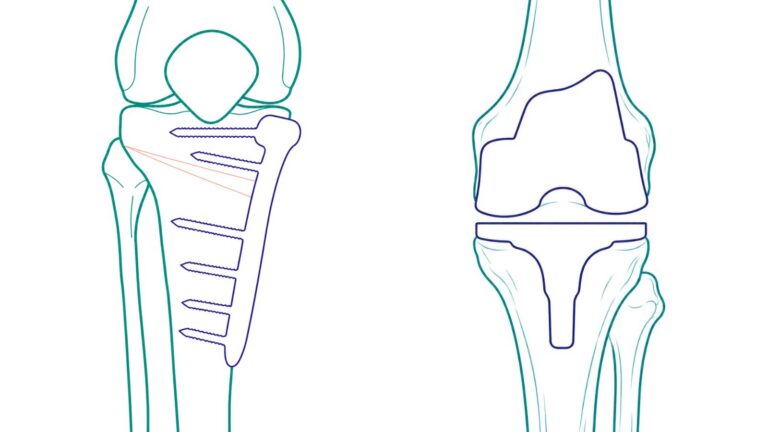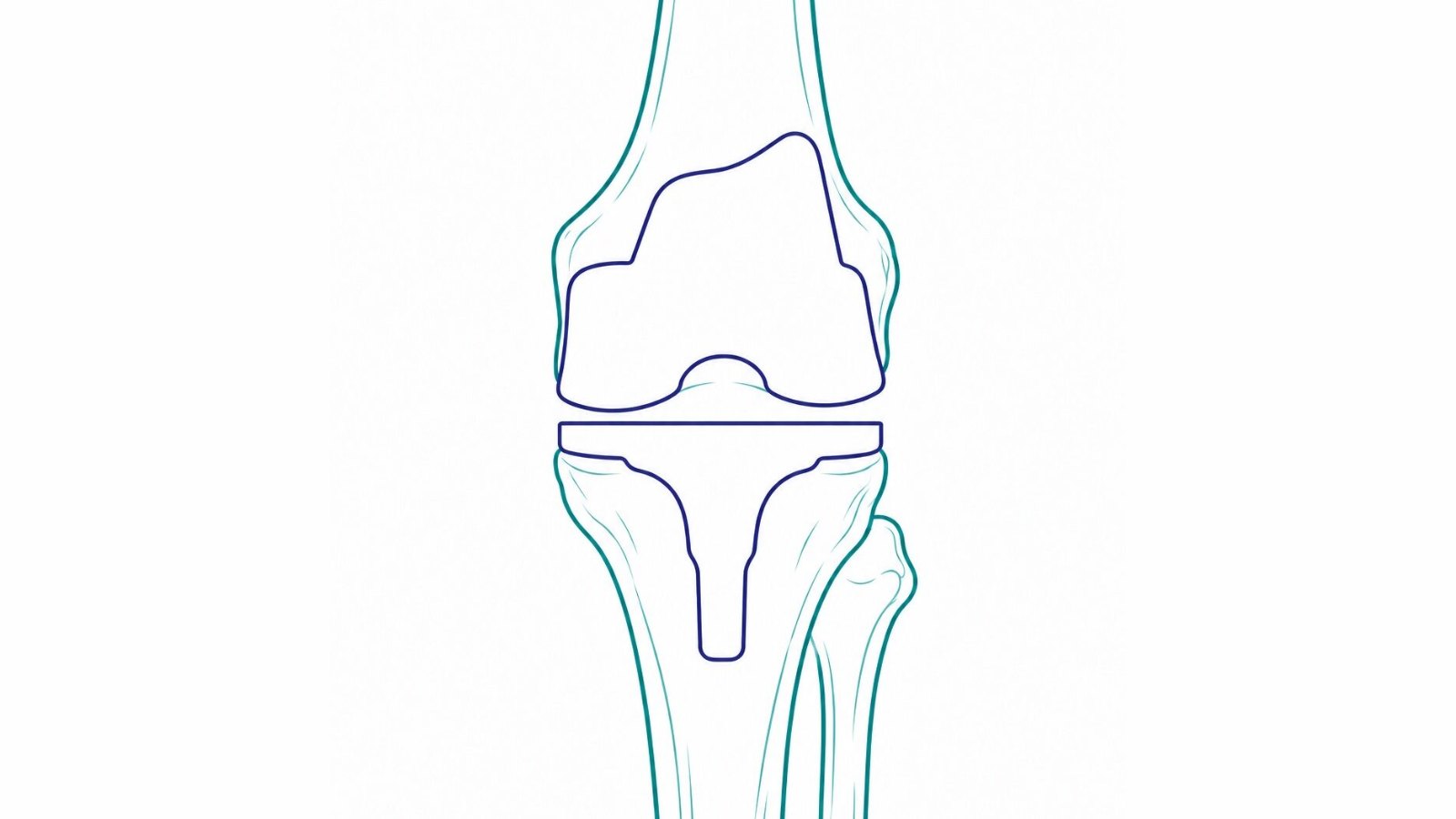
Yes. Most people are much more comfortable after a total knee replacement, but some continue to have pain even when the implant is well fixed and well positioned. Research suggests this affects roughly one in seven people a year or two after surgery, and the reasons often lie outside the implant itself.
Persistent pain is something I discuss with patients before a total knee replacement, because it is one of the most frustrating situations after surgery. The wound has healed, the X-rays look excellent, and yet the knee still hurts. Understandably, patients can feel they are not being believed when they are told that “everything looks fine”.
The pain is real. A well-positioned implant and a painful knee can exist together, and understanding why is the first step towards treating it.
How often does a knee replacement still hurt?
For many years the figure quoted was about one in five. That came from a 2012 review of studies that followed patients prospectively, in which about 20% reported an unfavourable pain outcome in the best-quality studies (PMID 22357571).
A 2025 update of that review pooled 68 studies and almost 600,000 patients. About 22% reported pain three months after surgery, falling to 12–15% between six months and two years (PMID 40398950). For many people this pain is mild or occasional, and often still better than the arthritis pain they had before.
Pain is usually described as persistent, or chronic, only once it has lasted more than three months after surgery (PMID 30586070). Before then, aching, swelling and stiffness are a normal part of recovery, and for some people improvement continues for up to a year.
What does “the X-ray looks good” actually mean?
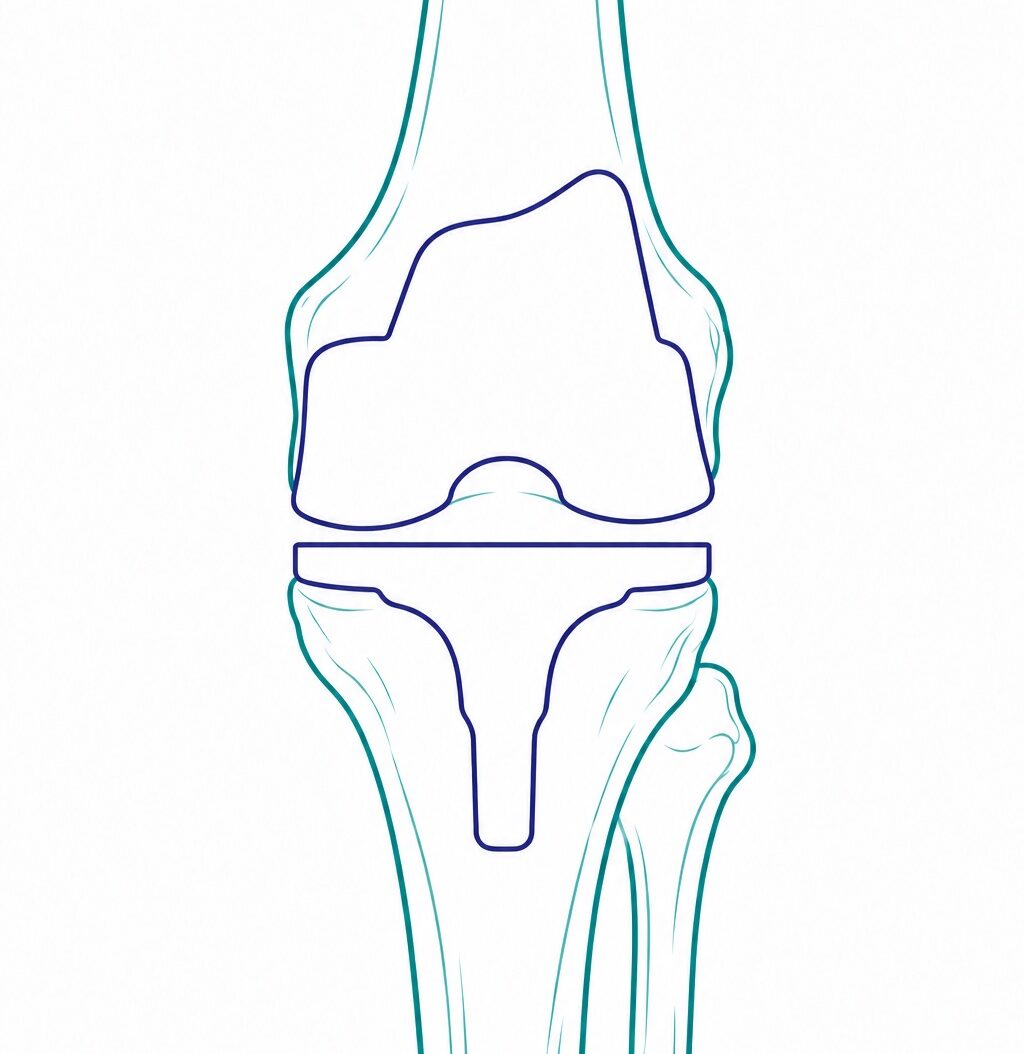
An X-ray answers mechanical questions. Are the components firmly fixed to the bone? Are they the right size and in a reasonable position? Is there a fracture, wear or loosening?
It cannot show the nerves, the soft tissues around the knee, a low-grade infection, or how the nervous system is processing signals from the joint. So when a surgeon says the X-ray looks good, it means a mechanical problem is less likely. It does not mean the pain is imagined.
When a replaced knee keeps hurting, the assessment looks for causes that can be treated:
- infection, which may need blood tests or a sample of joint fluid
- loosening, instability or stiffness
- rotation of the components, which may need a CT scan
- problems involving the kneecap
- irritated skin nerves around the scar, which I discuss in numbness after knee replacement
- pain referred from the hip or lower back
If the knee is in the right place, why does it hurt?
Pain is not simply a signal travelling from the knee to the brain. The brain produces pain as a protective response, based on signals from the tissues and on what the nervous system has learned from past experience.
After years of arthritis, the nervous system can become very good at protecting the knee. One theory is that it becomes sensitised, as if the volume on pain signals has been turned up. It may then continue to expect pain from the knee even after the worn joint surfaces have been replaced. This is often called central sensitisation. It remains a theory, but it is supported by research: people who had nerve-type or sensitised pain features before surgery were about twice as likely to have more pain afterwards (PMID 32791103).
A review of 30 studies involving more than 26,000 patients found that persistent pain was more likely in people who had severe pain before surgery, severe pain in the first days after it, and in younger patients (PMID 36255268). Pain in other parts of the body, and a heightened focus on pain with strong worry that it will continue, were also linked with more pain afterwards (PMID 25542191). Researchers call this pattern “pain catastrophising”, which is an unfortunate term. It describes a nervous system that years of pain have trained to expect pain and stay on high alert. It is not a weakness, and it is not a choice.
Interestingly, a large trial that taught pain-coping skills to people with high levels of pain worry, before and after knee replacement, did not improve pain at 12 months beyond the large improvement seen with usual care (PMID 30730481). That suggests these patterns are not simply a matter of mindset. Poor sleep, stress and low mood can also amplify pain signals, as they do with any long-term pain.
The pattern of arthritis matters too. Patients whose arthritis looked most severe on X-ray tend to gain the most from surgery, and those with milder changes gain less predictably (PMID 31338950).
Would a robot or a different alignment have prevented it?
Probably not, for most patients. Robotic systems and computer navigation help surgeons position implants more accurately. However, a 2026 trial of 339 patients across ten British hospitals found no meaningful difference in how often patients were aware of their knee 12 months after robotic-arm or conventional surgery (PMID 42624811). An analysis of trials following navigated knees for more than eight years also found no difference in function (PMID 31626013).
Accuracy is still worth pursuing, and I discuss the technology in more detail in robotic knee replacement. But if small differences in position were the main cause of persistent pain, these trials should have shown a clear benefit.
Can persistent pain be prevented?
There is no single test that reliably predicts who will have persistent pain. Exercise programs before surgery may help early recovery, but a review of randomised trials found they did not reduce long-term pain (PMID 31964670). Nerve blocks and other regional anaesthetic techniques may slightly reduce the risk, although the evidence is of low certainty (PMID 42425794).
The most useful preparation is usually making sure the pain is coming from arthritis that a replacement can treat, and talking openly beforehand about what surgery can and cannot achieve.
Treatment options for persistent knee pain
Treatment starts with finding out what is driving the pain. In a UK trial, patients with pain three months after knee replacement were offered a structured assessment and referral to targeted treatment. Over the following year they had less pain and less interference with daily life than those who received usual care (PMID 35243362). The difference was modest, but it shows the value of looking for specific causes rather than simply waiting.
Options then depend on the cause:
- A mechanical problem. Infection, loosening, instability or a significant positioning problem may need further surgery, sometimes a revision knee replacement. Stiffness may respond to targeted physiotherapy, and in selected cases to manipulation under anaesthetic or surgery to release scar tissue.
- Rehabilitation. A graded strengthening and activity program, adjusted to the knee’s response, helps restore confidence in the knee. Research has not shown one type of physiotherapy to be better than another, so the program should be tailored to the person (PMID 29490967).
- Nerve-type pain. Burning, electric or very sensitive pain may respond to medicines designed for nerve pain, desensitisation techniques or nerve blocks.
- Pain medicine and multidisciplinary care. A pain specialist, physiotherapist and psychologist working together can help the nervous system settle, with attention to sleep, stress and activity. This is not because the pain is “in your head”. It is because pain is processed by the brain as well as felt in the knee.
- Genicular nerve radiofrequency ablation. This procedure uses heat to quieten the small nerves that carry pain signals from the knee. The evidence for pain after knee replacement is still of low quality (PMID 40855681).
Long-term use of strong opioid medicines is generally best avoided, because their benefit tends to fade while side effects accumulate.
Revision surgery without an identified cause is a difficult decision. In a Danish registry study, patients revised for unexplained pain had lower knee scores and satisfaction than those revised for a loose implant (PMID 36257505). For that reason, revision is usually reserved for knees with a problem that surgery can correct.
When should you seek review?
Contact your surgical team promptly if pain is increasing rather than settling, or if there is fever, redness, wound drainage, new swelling or a sudden feeling that the knee is giving way. New calf pain and swelling, chest pain or shortness of breath need urgent medical assessment.
The bottom line
A knee replacement can be well fixed and well positioned and still hurt. This happens in a minority of patients, and it is not the patient’s fault. The reasons often involve how the nervous system has adapted to years of arthritis pain, rather than the implant itself.
Many painful knees continue to improve during the first year. When pain persists, a careful assessment can identify mechanical problems that need treatment, and a combination of rehabilitation, nerve-targeted treatment and pain-medicine support can help when the implant is not the cause.
If you would like a painful knee replacement assessed, you can read more about seeing a knee surgeon in Brisbane or about Dr Alexey Borshch, orthopaedic surgeon.
This article provides general information only and should not be considered individual medical advice. Treatment decisions should be made following a thorough assessment and discussion with your treating orthopaedic surgeon. It is not possible to determine the most appropriate procedure without considering your individual symptoms, examination findings and imaging.